The RPM of an aeroplane engine is the number of revolutions per minute that the engine’s crankshaft or propeller makes. The RPM indicates the power and speed of the engine, with higher RPMs generally meaning more power. But, the RPM of an aeroplane engine depends on several factors, such as the type, size, and design of the engine, the altitude, temperature, and humidity of the air, and the throttle setting and load of the aircraft.
There are different types of aeroplane engines, such as piston, turboprop, turbojet, turbofan, and turboshaft. Each type has its range of RPMs, depending on the specific model and configuration. For example, a typical piston engine used in general aviation aircraft can have an average RPM of around 2500, while a typical turboprop engine can have an average RPM of around 2000. A typical turbojet engine can have an average RPM of around 8000, while a typical turbofan engine can range from 2500 to 4500. A typical turboshaft engine can have an average RPM of around 6000.
The RPM of an aeroplane engine can also vary depending on the altitude, temperature, and humidity of the air. The higher the altitude, the lower the air density, which means less air for the engine to intake and burn fuel. This reduces the power and the RPM of the engine. The higher the temperature, the lower the air density, which also reduces the power and the RPM of the engine. The higher the humidity, the more water vapour in the air, which displaces some of the oxygen and reduces the combustion efficiency. This also reduces the power and the RPM of the engine.
They can also change depending on the throttle setting and the load of the aircraft. The throttle controls the amount of fuel and air that the engine receives, and thus the power and the RPM of the engine. The higher the throttle, the higher the power and the RPM of the engine. The load of the aircraft refers to the weight and drag that the engine has to overcome to fly. The higher the load, the more power and RPM the engine needs to produce to maintain the same speed and altitude.
In Jet engines air is compressed by fan blades and directed to the combustion chamber, where it is mixed with fuel and ignited. The hot exhaust gases then exit the engine and provide thrust. A jet engine can handle a large amount of water ingestion, as most of the water is spun out by the fan blades and flows through the bypass duct, which is the space between the engine core and the cowling.
The bypass air does not enter the combustion chamber, but rather provides additional thrust and cooling for the engine core. Therefore, only a small fraction of the water actually reaches the combustion chamber, where it is quickly vaporized by the high temperature.
The combustion chamber of a jet engine can reach temperatures of up to 900 °C (1,650 °F), which is much higher than the boiling point of water. So any water that enters the combustion chamber is instantly converted into steam, which does not affect the combustion process significantly. The pressure in the combustion chamber is also very high, which prevents water from condensing or freezing on the engine components.
Jet engines have to meet certain standards and regulations for water ingestion, which are based on extensive testing and simulation. They are exposed to artificial rain and ice during the certification process, and they have to demonstrate that they can operate safely and reliably under these conditions. These engines also have features that prevent or minimize the effects of water ingestion, such as heated intakes, anti-icing systems, water separators, and drain valves. These features help to prevent ice formation, water accumulation, and corrosion in the engine.
These are some of the reasons why rain does not affect jet engines. Jet engines are robust and resilient machines that can cope with various weather phenomena, such as rain, snow, hail, and clouds.
One of the most thrilling things to do on this planet has always been flying. Additionally, it is the world’s quickest form of transportation. People can travel in a matter of hours by using airplanes to fly between locations across different continents, nations, and oceans.
In the past, such vast distances were covered by ships on the water or by road trips over the course of days or weeks. There are now airplanes that take just minutes to get to their destination because of technological advancements.
We will showcase the top 12 fastest airplanes in the world in this article. These aircraft reach the maximum speeds possible, which no other kind of transportation can. Our ranking will be based on speed.
But before moving to the list, let’s first discuss –
When compared to the speed of sound, Mach numbers are relative. The speed of sound, or Mach 1.0, is 332m/s (1,195 kph or 717 mph). When an airplane or helicopter travels faster than the speed of sound, it breaks the so-called “sound barrier,” which often causes a sonic boom.
So, now let’s watch some jets break the sound barrier and create a sonic boom down the list.
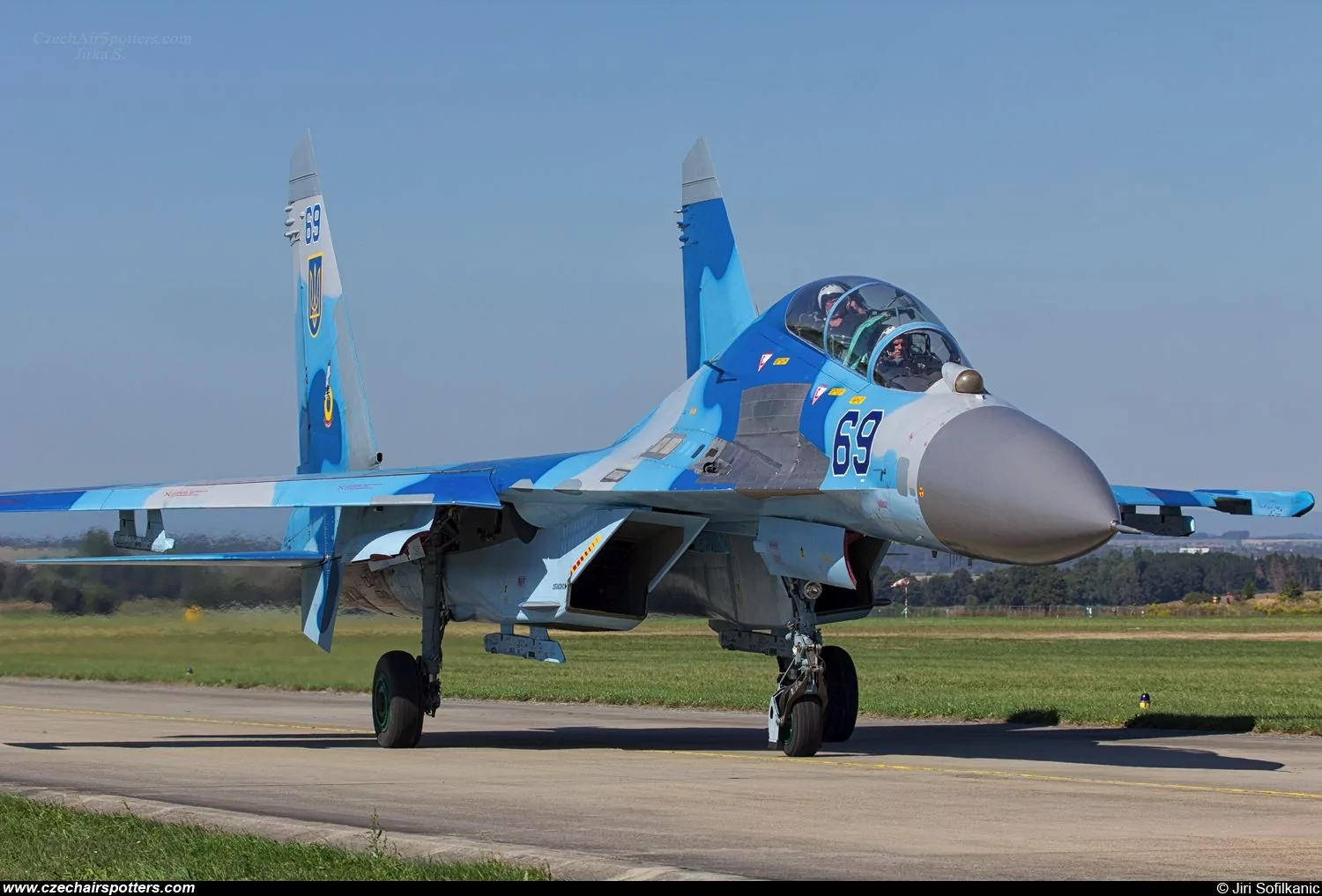
Sukhoi SU-27 “Flanker”, Soviet Union
Image credit: https://i.pinimg.com
The Sukhoi SU-27, a twin-engine fighter jet developed by the Soviet Union in response to the American fourth-generation fighters, is still in use today. The SU-27s, often known as “Flankers,” are over 35 years old and have a top speed of 1600 mph (2.08 Mach).
The “Flanker” was built for extreme mobility and air superiority, enabling it to carry out a range of aerial operations. Numerous variations, like the Chinese Shenyang J-11, were created from the “Flanker” because of its popularity and all-around strength as a fighter jet.
McDonnell Douglas F-4 Phantom II, United States
Image credit: https://i.pinimg.com
American tandem two-seat, twin-engine, all-weather, long-range supersonic jet interceptor and fighter-bomber, the McDonnell Douglas F-4 Phantom II was initially created by McDonnell Aircraft for the American Navy. It began service with the Navy in 1961 before being accepted by the United States Marine Corps and the United States Air Force, and by the middle of the 1960s, it had grown to be a significant part of their air arms, demonstrating its high adaptability.
Phantom manufacturing lasted from 1958 to 1981, and a total of 5,195 aircraft were produced during that time, making it the most American supersonic military aircraft ever created and solidifying its status as a Cold War icon.
Large fighter The Phantom has a peak speed of 1606 mph (Mach 2.093). It can carry a variety of bombs, air-to-ground missiles, and more than 18,000 lb (8,400 kg) of weaponry on nine external hardpoints.
The F-4 was originally created without an internal gun, just like other interceptors of the era. Later versions came equipped with an M61 Vulcan rotary gun. It established 15 in-flight performance world records starting in 1959, including marks for absolute speed and altitude.
F-111 Aardvark, United States
Image credit: https://i.pinimg.com
The General Dynamics F-111 Aardvark is a supersonic medium-range tactical aircraft that was first introduced in the late 1960s and is predominantly utilized as a fighter bomber or strategic bomber. It has a maximum speed of 1,650 mph (Mach 2.15).
No longer in use; the USAF has replaced it with the F-15E Strike Eagle for strike missions, and the B-1B Lancer now serves in that capacity for supersonic bombers. Many aviation innovations, like variable-sweep wings and after-burning turbofan engines, were first used by the F-111.
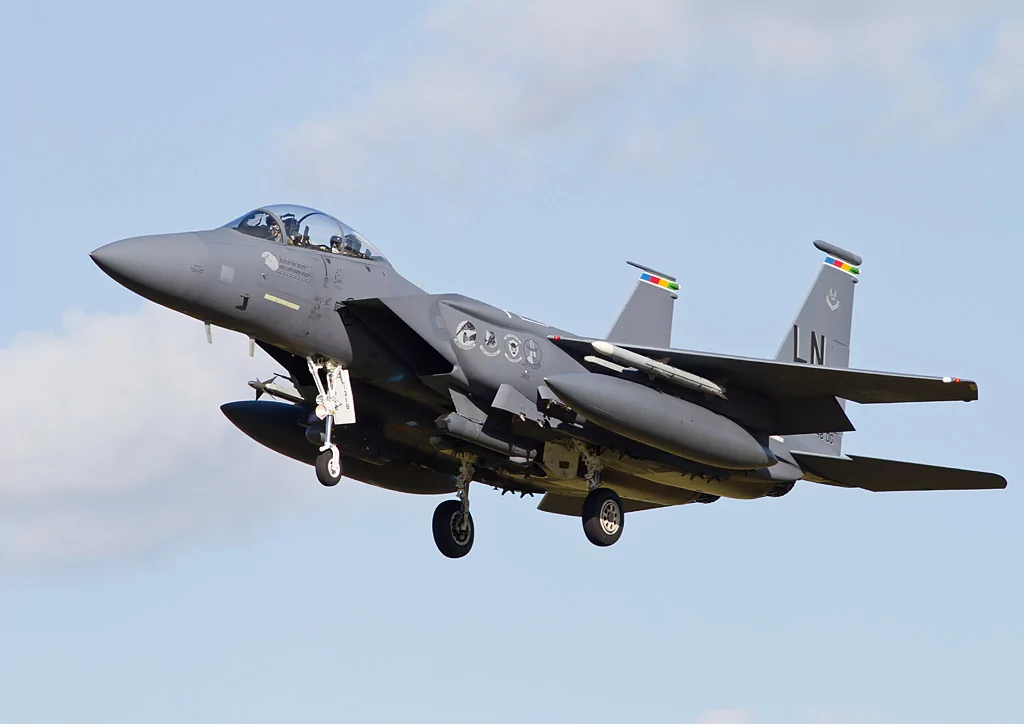
McDonnell Douglas F-15E Strike Eagle, United States
Image credit: https://farm7.static.flickr.com
The McDonnell Douglas F-15E Strike Eagles can reach a top speed of 1650 mph (2.15 Mach). The long-range, high-speed bomb raids and air superiority were the two main goals of the American-made tactical bomber.
Since its introduction into service in 1976, the supersonic bomber has largely remained unchanged. It is regarded as one of the most successful aircraft the American military complex has ever produced. Additionally, the success is not just limited to the United States. Israel, Saudi Arabia, and South Korea are just a few of the nations that have made purchases.
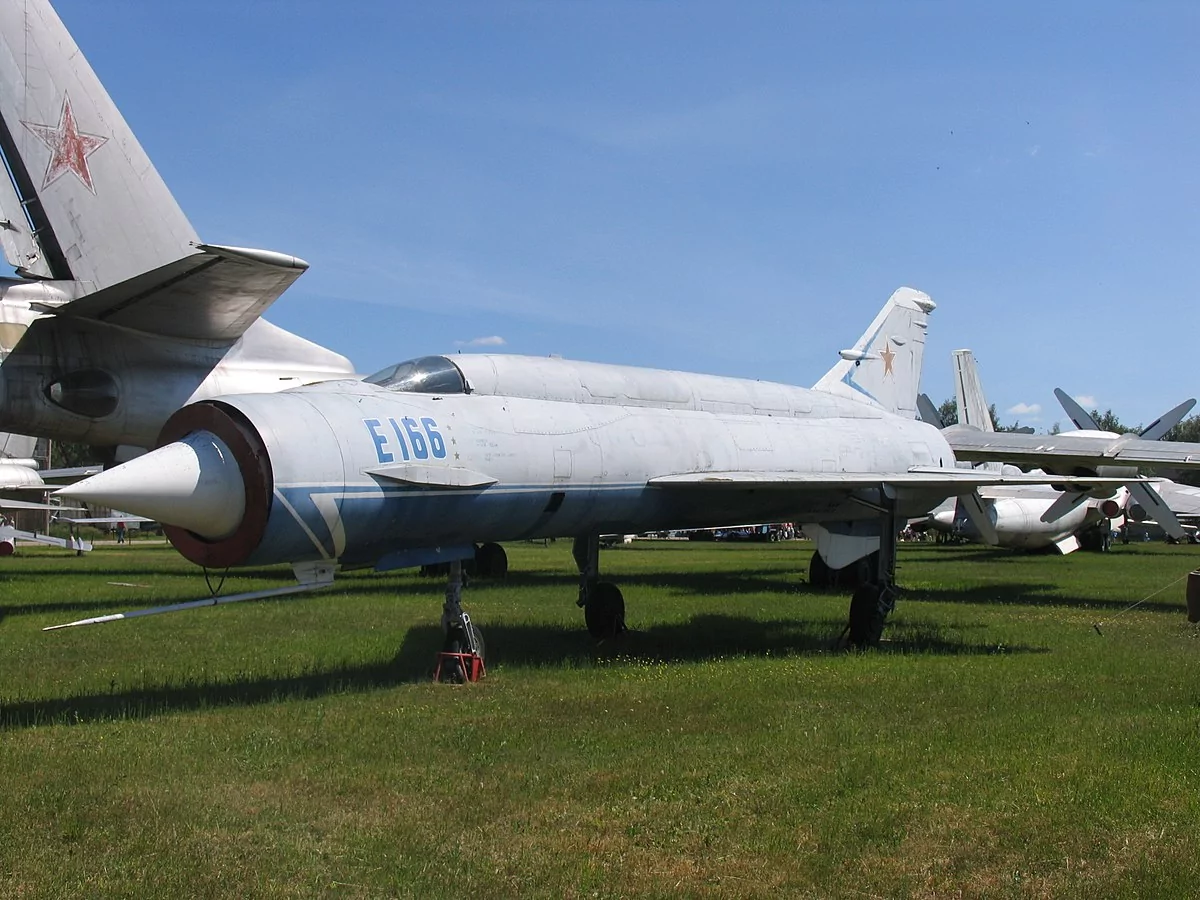
Mikoyan Gurevich Ye-166, Soviet Union
Image credit: https://upload.wikimedia.org
Due to the OKB’s focus on the Ye-155P (MiG-25P), the development of the Ye-152 series of interceptors was halted; nevertheless, the last prototype was finished for high-speed research as the Ye-152M with an R-15B-300 engine producing an afterburning thrust of 22,509 lb (10210 kg).
On 7 October 1961, the Ye-166 aircraft set an absolute speed record on a 100 km (62 mi) closed circuit of 1,616 mph (Mach 2.1), then on 7 July 1962, it set an absolute speed record of 1,665 mph (Mach 2.17).
Mikoyan MiG-31 “Foxhound”, Soviet Union
Image credit: https://getwallpapers.com
The MiG-31 “Foxhound,” another byproduct of the Cold War, outperformed its predecessors by giving up speed while maintaining maneuverability. The plane can reach 1900 mph (Mach2.47), making it one of the fastest in the world.
The “Foxhound” was among the first aircraft to use radar systems to intercept stealth fighters in addition to its high speed. The Soviet Jet then gained the ability to launch long-range air-to-air missiles, a feat accomplished by only one other aircraft at the time.
XB-70 Valkyrie, United States
Image credit: https://i.imgur.com
The North American XB-70 Valkyrie was a supersonic strategic bomber and the only bomber to ever travel at these speeds. It was developed as a prototype for the intended B-70 nuclear bomber. The XB-70, which was created in the late 1950s, could travel at a speed of 2,056 mph (Mach 2.67) while aloft at 21,000 m (70,000 ft).
The B-70 was thought to be immune to any interceptor aircraft at these speeds and altitudes because it would be too quick for any other aircraft to catch up to it and would be hard for radars to detect.
The XB-70, however, acquired a flaw as surface-to-air missile technology improved, prompting the USAF to begin testing it at lower altitudes. However, compared to the B-52, which it was intended to replace, the XB-70 did not significantly improve performance.
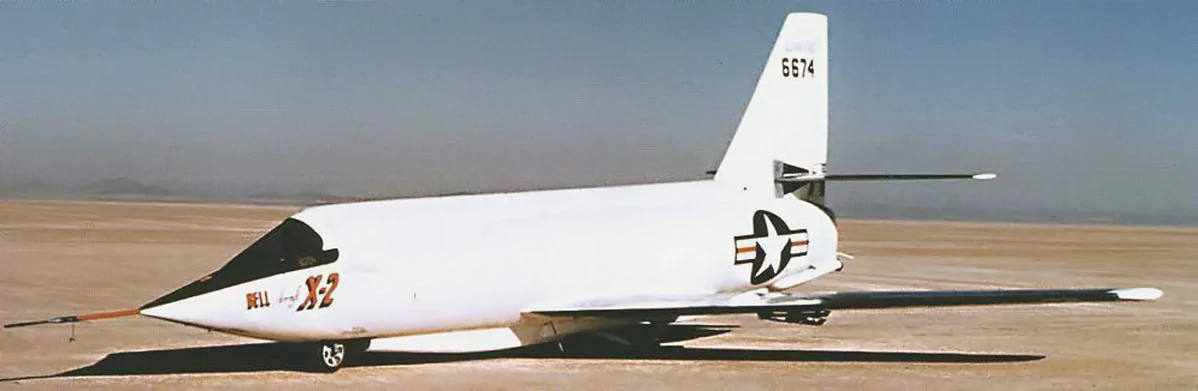
Bell X-2 Starbuster, United States
Image credit: https://1.bp.blogspot.com
The Bell X-2 Starbuster was a research aircraft created in the 1940s and 1950s and was another rocket-wing design aircraft similar to the X-15. The primary goal of the X-2 was to investigate the ‘thermal thicket’ heating issue that was brought on by aerodynamic friction during flight characteristics in the Mach 2-3 region.
The Bell X-2 was created to deliver useful research faster and at higher altitudes than the Bell X-1. Three years later, the X-15 would enter development and significantly outperform the X-2 in terms of speed. It displayed a maximum speed of 2,094 mph (Mach 2.72).
Mikoyan-Gurevich MiG-25 “Foxbat” , Soviet Union
Image credit: https://www.flying-tigers.co.uk
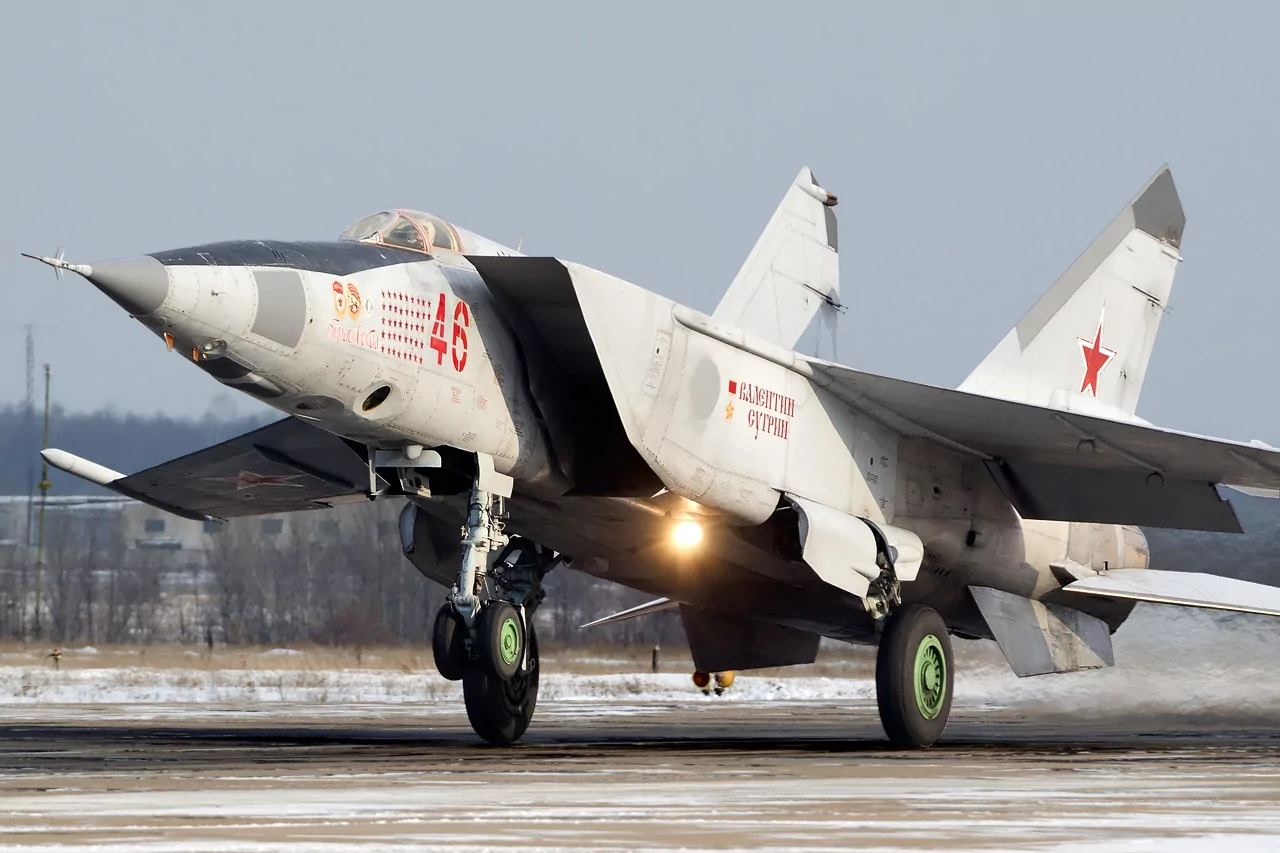
The MiG-25 “Foxbat” was the final aircraft ever created by Mikhail Gurevich, a Soviet super-engineer who worked with his company, Mikoyan-Gurevich, to create the majority of the Soviet Union’s aircraft during the Cold War. At 2,190 mph (Mach 2.85), the plane was among the fastest in the world at the time.
NATO and US military intelligence panicked when the “Foxbat” showed up because of the sight of the incredibly fast and maneuverable jet. The militaries of both sides immediately accelerated the development of their own jet designs and production to match the Soviets. One of the fastest jets ever continuously produced is still the MiG-25.
Lockheed YF-12, United States
Image credit: https://i.imgur.com
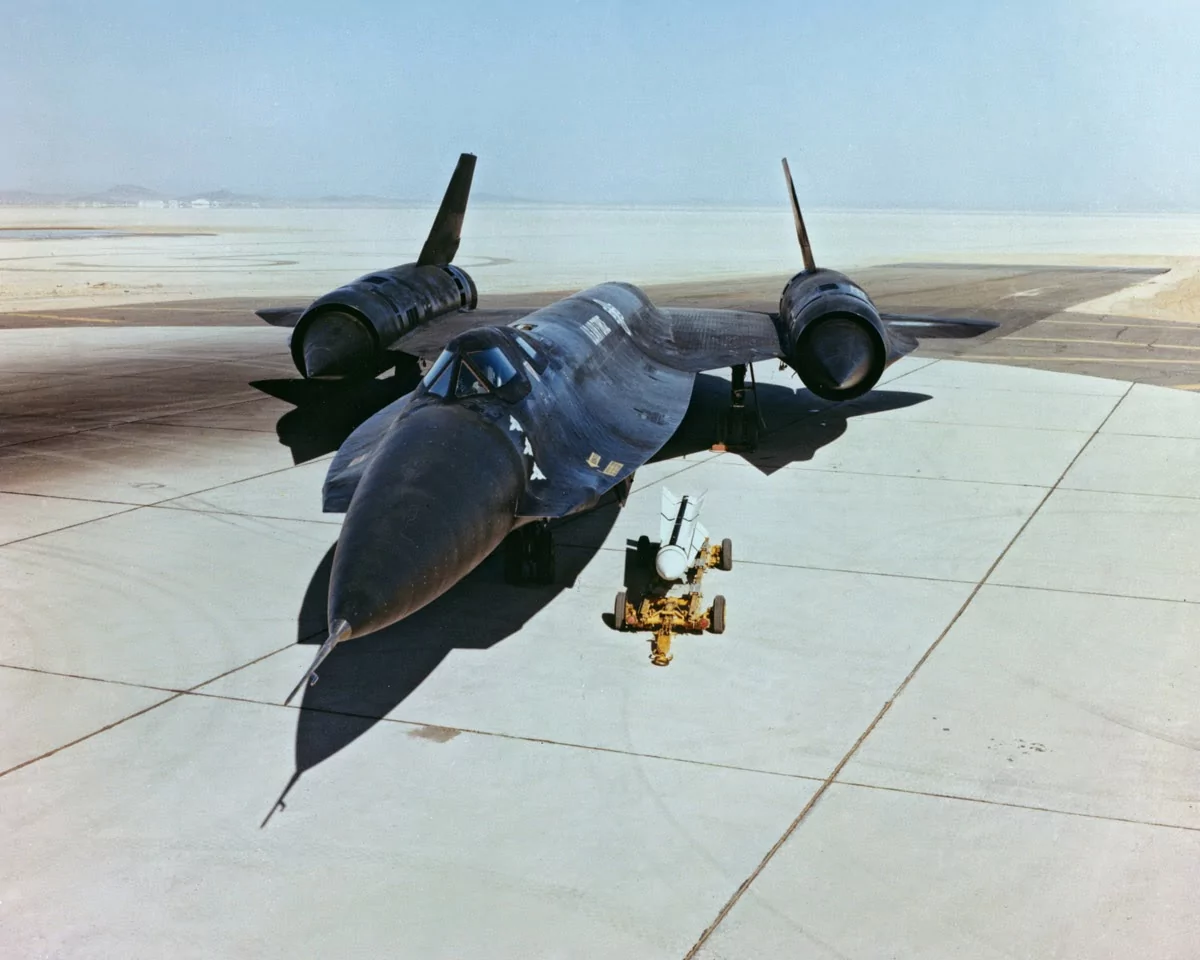
The SR-71 Blackbird’s prototype and precursor was the Lockheed YF-12. Three YF-12s were built as prototype interceptor planes in the late 1960s to replace the F-106 Delta Dart interceptor once development got underway. It displayed a top speed of 2274 mph (Mach 2.96).
The USAF was allocating resources at the time of development to the Vietnam War and other military objectives. The YF-12 was retired by the USAF and eventually served as a NASA research aircraft before serving as the prototype for the SR-71, which later entered production and was used by the USAF.
Lockheed SR-71 Blackbird, United States
Image credit: https://i.pinimg.com
The Lockheed SR-71 Blackbird, which was jointly developed by NASA and the U.S. Air Force, is the fastest air-breathing manned aircraft, reaching a top speed of 2500 mph (Mach 3.25). The Blackbird was designed as a reconnaissance aircraft, and its primary function is intelligence gathering.
The aircraft lacks the stealth features of other American aircraft in the fleet and does not even carry any weapons. Instead, outrunning the weapons is the best defense against surface-to-air missiles and other forms of attacks, something the SR-71 is more than capable of performing.
North American X-15, United States
Image credit: https://live.staticflickr.com
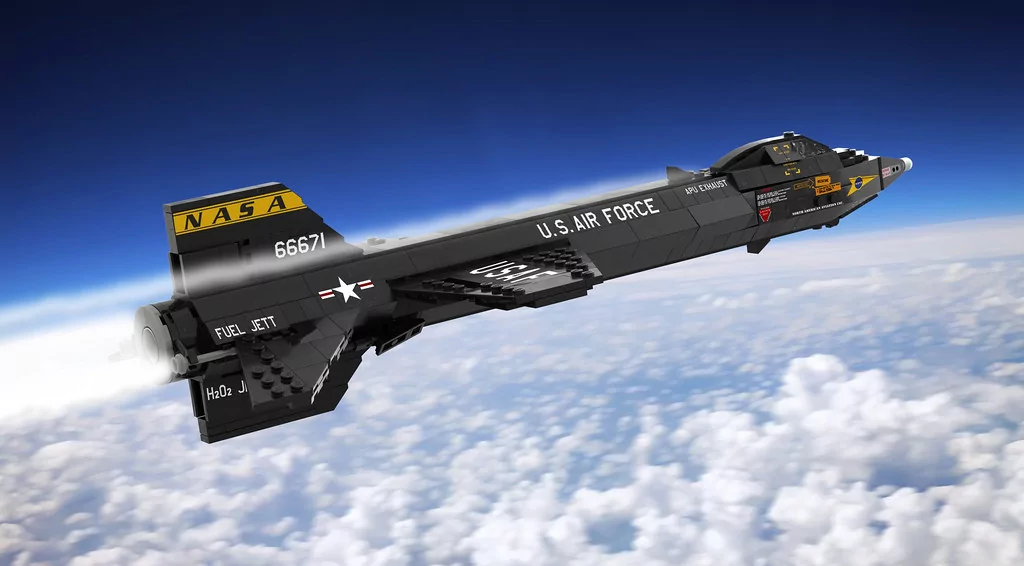
As the fastest aircraft ever built, the North American x-15 is classified as hypersonic rather than supersonic since it can travel faster than five times the speed of sound. It still holds the record for the fastest manned aircraft, with the majority of later aircraft not even coming close. Its peak speed is 4520 mph (6.7 Mach).
The plane had to be dropped from another aircraft because its tail fin prevented it from taking off at slow speeds. Prior to being retired, the aircraft was primarily utilized for research flights, but it nevertheless achieved a record for speed that hasn’t been surpassed in any way.
Helicopters are more expensive than planes because of the extra complexity they provide. The rotors are the first component to consider, as they are more complex and must comply with stringent safety rules.
When you buy a helicopter once, you’ll pay the same amount every time you want to fly in one. Helicopters have a greater crash rate than private planes, so insurance premiums are often exorbitant, and that’s before you take in the expensive expenditures of maintenance and fuel. To reach the clouds, though, is worth the effort.
Whether or not you should buy a helicopter is not a question I can help you with. You could buy one of these rotorcraft, but only if you had the necessary funds.
As a result of developments like lighter helicopters and do-it-yourself kits, the overall cost of helicopters has decreased. Having fewer seats and a smaller footprint will reduce the machine’s price. Kit helicopters and fully assembled models are both included. Although some of them are military planes, most of them are commercial airlines.
Eurocopter EC120 – ($1.4 million)
Image credit: aerocorner.com
With the exception of the AS350/H125, Eurocopter is not widely known for producing affordable helicopters. In spite of this, the EC120 Colibri is among the most reasonably priced helicopters available!
The Lama and Gazelle helicopter families were getting old, and Aérospatiale learned that a replacement was not likely in the late 1980s. Thus, a brand-new five-seat utility helicopter named the P120 made its debut. By the 1990s, Airbus had absorbed Aérospatiale, resulting in the creation of Eurocopter (now Airbus Helicopters). To start out strong, the P120 was renamed the EC120 and released.
The EC120 could go 727 km (452 mi) at a speed of 191 kph (119 mph). In an effort to boost sales, Eurocopter has set the EC120’s price at $1.4 million!
AgustaWestland AW009 – ($1.3 million)
Image credit: live.staticflickr.com
The AW009 was initially used by the Polish Air Force as the PZL SW-4. Due to AgustaWestland’s acquisition of PZL in 2016, the SW-4 was renamed the AW009 for the commercial market.
Similar to how successfully the SW-4 has performed as a military chopper, the modified AW009 has been a very successful commercial helicopter. The AW009 is used by many of the few news crews still use helicopters.
This is in part because the AW009 is one of the most cost-effective helicopters available. Its $1.3 million purchase price and $200 per hour operating cost make it the ideal choice for journalistic organizations and aviation schools.
In addition to all of this, AW009 has a top speed of 260 kph (161 mph) and a range of 790 km (490 mi). As a result, it has emerged as the favored mode of VIP transportation.
MD 500E – ($1.1 million)
Image credit: bjtonline.com
McDonnell Douglas is better recognized for its airliners than its helicopters, which are less well-known (like the DC-10 and MD-11). They nevertheless developed the MD 500, one of the most reasonably priced helicopters ever.
The MD 500 was initially created by Hughes Aircraft Company as a small surveillance helicopter. The MD 500 was effective in this endeavor because it was substantially more dependable and inexpensive than its competitors. McDonnell Douglas’ bid seemed too low, given their inability to make a profit on the helicopter and repeated cost overruns. As a result, the US Army decreased its order.
Instead, many media outlets and police departments bought the MD 500 because of its fast speed, high service ceiling, and exceptional range. Additionally, they purchased it since it cost $1.1 million and had room for five people, including a pilot.
Bell 505 Jet Range X – ($1.07 million)
Image credit: aerocorner.com
I would choose the Bell 505 if I had the means and the power to command any of the helicopters featured in the article. Due to its features and the fact that it is one of the most reasonably priced helicopters on the planet.
In the early 2010s, Bell discovered that several of its light helicopters were getting old and needed replacements right away. Bell built just one light helicopter as opposed to many more to replace the many others.
Depending on the intended usage of the helicopter, the factory can modify it to meet your requirements. In order to carry out these duties, Bell designed it to fly at 232 kph (144 mph) at a range of 617 km (383 mi).
The Bell 505 is also one of the heaviest helicopters in the world, weighing in at 2,030 lbs (4,475 Kg) when carrying two tonnes of cargo or four people. In order to boost sales, Bell only charges $1.07 million for the Bell 505!
Robinson R66 – ($935,900)
Image credit: aonehelicopters.com
The Robinson Helicopter Company manufactures some of the most cheap helicopters in the world. The R66 is identical. Like other Robinson helicopters, the R66 is a utility and training helicopter.
Following the commercial and critical successes of the R22 and R44, Robinson decided to reintroduce a new helicopter. The R44 was modified to become this helicopter, known as the R66.
In contrast to the piston-powered R22 and R44, the R66 is a turbine-powered vehicle. The R66 can carry four people or 1,200 lbs (540 kg) of freight because of its longer fuselage than the R44.
The R66’s 648 km (402 mi) range and 200 kph (130 mph) top speed increase its range and speed to 650 km (400 mi). The total price is a mere $935,900!
Bell 206 – ($900,000)
Image credit: aerocorner.com
The Bell 206 was first designed as a small reconnaissance helicopter for the US Army. However, the US Army chose another Bell design and expressed little interest in the helicopter.
Other startup companies expressed interest after seeing the 206’s specifications, but they didn’t like how the body looked. The exterior of the airframe was immediately altered by Bell, who then unveiled it as the Bell 206. Because of its previous military employment, the 206 was one of the quickest and had one of the longest ranges of any helicopter at the time. Bell also sweetened the deal by charging the 206 just $900,000!
The Bell 206 provides more space for one pilot and up to four passengers than many other news teams’ helicopters. Since then, police departments have come to really like using them as VIP transports and pursuit helicopters.
Sikorsky Schweizer S333 – ($698,000)
Image credit: aerocorner.com
The Bell 206 series is slightly more expensive than the Sikorsky Schweizer S333. The cost of this chopper is approximately $698,000.
Actually, the first helicopter was created by Sikorsky. Igor Sikorsky, a Russian American inventor who was born in Ukraine, created this flying device in 1939. The Sikorsky business, however, has not sat back on its historical success and is still making advances in the helicopter industry.
The Schweizer company, an aviation business that Sikorsky acquired in the early twenty-first century, actually created the Sikorsky Schweizer S333 first. Sikorsky made improvements to the design in addition to adding its name. A quick, light helicopter that may be utilized for both military and civilian missions was the end product. It is a well-liked aircraft for flight schools since it is simple to fly.
Robinson R44 – ($505,900)
Image credit: upload.wikimedia.org
In addition to the Robinson R66, Robinson Helicopter Company also produced the Robinson R44, whose design served as an inspiration for the R66. Like the Robinson R66, the Robinson R44 is among the most affordable helicopters in existence.
They decided to capitalize on Robinson’s R22 triumph (more on that in a moment!). Here, the fuselage was extended, and the engines and rotors were improved.
As a result, the R44 could accommodate three passengers and one crew member. Because of this, law enforcement agencies, air forces, corporations, flying clubs, and general aviation helicopter pilots all adore it!
Robinson planned for the R44 to have a 200 kph (130 mph) range of 560 km (347 mi). Robinson set the R44’s price at $505,900 in order to make it even more alluring than its competitors!
Enstrom TH180 – ($400,000)
Image credit: upload.wikimedia.org
One of the most cutting-edge businesses in the helicopter design industry is Enstrom. It is most known for its compact, single-engine designs that continue to push the limits of capacity. The Enstrom TH180, one of the most well-liked variants, is also among the most reasonably priced at $400,000 per unit.
One of Enstrom’s most recent models, the TH180, is lighter and more streamlined than earlier iterations. Despite its diminutive size, it possesses a respectable range and speed. Before all the specifications were even announced, numerous flight schools pre-ordered this model due to the intense anticipation around it.
The two-seater TH180, like many of Enstrom’s helicopters, is well-liked by flying schools. Learning to fly is simple for newbies to the field.
Enstrom F-28 – ($360,000)
Image credit: aerocorner.com
The F-28 has been manufactured consistently for a very long time and is not only one of the most economical helicopters in the world. Typically, the F-28 is utilized as a general aviation or instruction helicopter.
In the late 1950s, helicopters were frequently used throughout the US. With this, numerous other people—among them Rudolph J. “Rudy” Enstrom, a mining engineer at the time—attempted to develop their own helicopter designs.
He observed that, in contrast to his friends, there weren’t many accessible, entry-level helicopters. In order to train military helicopter pilots, he, as a result, built a very basic helicopter. It ultimately became a pillar of general aviation.
This was caused in part by the F-28’s unbelievably low price of $360,000. In 1975, the airframe shell of the F-28 received an aerodynamic overhaul, and now it shares the F-28’s cheap cost.
Guimbal Cabri G2 – ($350,000)
Image credit: ainonline.com
Creating lightweight, reasonably priced helicopters is all that the French business Hélicoptères Guimbal does, and it does it extremely well. Guimbal manufactures the Cabri G2, dubbed “the small big helicopter,” for only approximately $350,000.
Guimbal did not make any compromises when reducing expenses and extra weight. Due to its sleek cabin, crash-resistant features, and main rotor that gives the stability of a larger helicopter, the Cabri G2 has a lot of the power of larger helicopters.
Sport flyers and those who are just learning to fly love this two-seater airplane. Additionally, the elegant interior is a favorite among those who appreciate design.
Robinson R22 – ($328,200)
Image credit: internationalaviationhq.com
Based on the R22, Robinson Helicopter Company also produces the R44 and R66. Along with the Robinson R44 and R66, the Robinson R22 is one of the less-priced helicopters!
Prior to the middle of the 1970s, very few civilians owned helicopters. As television became so popular, news organizations from all around the world began asking for an inexpensive airplane they could use for filming. Among those who heard this was Frank Robinson. He decided to build a small helicopter with a high service ceiling that could carry two people as well as a variety of cameras in different settings.
His competitors’ helicopters, on the other hand, varied in price and quality. To boost sales, Robinson provided the R22, a superior helicopter, at a discount. That sum is currently around $328,200.
Hummingbird – ($227,000)
Image credit: vertical-aviation.com
Many manufacturers produce helicopter kits for aviation enthusiasts who desire to build their own machines. The typical aviation enthusiast can construct helicopter kits because they don’t demand a lot of specialist knowledge and only take a lot of time. One of these kits with the highest price tag, the Hummingbird 300L, costs roughly $227,000.
One of the rare helicopter kits with four seats is the one from Vertical Aviation Technologies (most have only one or two seats). It costs slightly more than other DIY helicopter kits because it is bigger than other kits, but only marginally.
Given its greater capacity and high safety regulations, this kit makes a perfect family helicopter (the model was originally supposed to be a commercial helicopter).
Safari 400 – ($143,000)
Image credit: hangar67.com
Another DIY helicopter kit is the Safari 400; however, this one is made by Safari Helicopters. At $142,800 for the complete set, it is marginally cheaper than the Hummingbird 300L.
One of the easiest kits for beginners is the Safari 400. The majority of the intricate assembly is completed in the factory, including the installation of a wire harness that makes it even simpler for novices to put electrical wiring together. If you lack the storage room for the entire kit at once, you may even get it in four separate sections.
The Safari 400’s excellent Lycoming O-360 piston engine, one of the best helicopter engines, ensures that power is not compromised for ease.
HeliWhale Afalina – ($120,000)
Image credit: i.pinimg.com
Since its release in 2016, the Afalina has been recognized as the world’s most cheap helicopter. This is largely accurate because it is one of the least expensive to purchase and run.
The “cheap” helicopter that helicopter manufacturers have been considering introducing for years is attempted by many of the aforementioned models. The average person, however, has never really had access to them.
This is what HeliWhale has decided to try. The price of a two-seat helicopter that was released in 2015 was less than $120,000, and it could accommodate one crew member and one passenger. Due to the helicopter’s pricing and specifications, HeliWhale received numerous requests for it. It costs $120,000 for a helicopter with a range of 750 km (470 mi) and a cruise speed of 200 kph (120 mph).
Phoenix A600 Turbo – ($108,500)
Image credit: rotorxaircraft.com
One of the newest and most well-liked helicopter kits in the world is the Phoenix A600 Turbo from Rotor X. It was introduced in 2021 and is based on RotorWay’s earlier A600 kit, which Rotor X recently acquired. You may get this kit for the comparatively cheap sum of $108,550.
The popularity of this helicopter kit can be attributed to a number of factors. One is the superior design, which resembles a helicopter that was manufactured rather than one that was assembled from a kit.
The Rotor X A600 Turbo’s exceptional performance also contributes to its appeal. It has a great piston engine and FADEC controls. Another appeal is the simplicity of the build, which only needs common hand tools and has a helpful community available to assist clients when they run into trouble. Although the gasoline tank is not as good as those in some other models, you may purchase an Aux tank to increase the range.
Brantly B-2 ($100,000)
Image credit: flugzeuginfo.net & photographed by: John Allen
Despite its simple exterior, the Brantly B-2 is the most cheap helicopter in the world. It has generally been seen as a dismal failure, yet in at least one area—pricing—it has excelled.
In 1946, the US Army Air Corps wanted a modernized light reconnaissance helicopter. One of the independent designers was a man named N O Brantly, who had aspirations of creating his own helicopter empire.
However, the idea was too complicated to actually use. The result of Brantly’s decision to create a helicopter that would appeal to fans of private flying is the Brantly B-2.
Brantly spent less money building the full aircraft than its competitors yet marketed it for the outrageously low price of $100,000. Since its initial release in 1958, it has been sold more than 330 times.
HeliCycle – ($67,000)
Image credit: kitplanes.com
With a price tag of around $67,000, the HeliCycle is among the cheapest helicopters available. The DIY kit is ideal for an aviation and DIY enthusiast on a tight budget.
Because it is considerably smaller than conventional helicopters, the HeliCycle is extremely inexpensive. It is only suitable for lone wolf flyers since it only fits one person. It has a space-saving gas turbine engine that nonetheless generates power.
Keep in mind that once your build is complete, you will need to invest more funds to purchase essential add-ons like a radio and electronics system. These aren’t included in the HeliCycle’s original design because many pilots like to customize them.
Composite-FX XE 290 – ($55,000)
Image credit: composite-fx.com
The Composite-FX XE 290 is the most reasonably priced factory-built helicopter you can purchase, costing only $55,000 as a kit or $70,000 when factory-finished.
Because they are so small, Composite’s FX series helicopters are jokingly referred to as “mosquitos.” These helicopters only have one seat, so they are not the best choice if you want to take the whole family somewhere. The ultra-lightweight cabin and reduced capacity, however, save assembly costs.
With an 800cc 90HP fuel-injected piston engine, the Composite-FX XE 290 is a compact but powerful vehicle. The maximum speed is 95 mph (152 kph). For two hours, it can go at 80 mph (128 kph). The XE 290 weighs 390 lbs (177 kg) when empty, and its maximum gross weight is 720 lbs (362 kg).
Composite-FX XE – ($46,000)
Image credit: composite-fx.com
The Composite-FX XE, an even lighter variation of the well-liked Composite-FX XE 290, is the least expensive helicopter on the market. The price of this helicopter will only be $46,000 if you purchase it as a kit. For $59,000, you can also purchase it factory-finished.
Most cars weigh more than the XE’s 298 lbs (135 kg), which is less; 610 lbs (276 Kg) are its maximum gross weight with the pilot. It has a carbureted MZ202 engine. The XEL model also allows you to land on water because it includes floats.
The FAA classifies the Composite-FX XE as an ultra-light aircraft under Part 103 due to its modest size. The kit can be purchased and put together without a pilot’s license! Before using it, it is strongly advised that you have the appropriate training and a license.