Showing posts with label Discoveries & Secrets. Show all posts

Monday, December 25, 2023

Secrets Behind Ancient Maya's Super Strong Architecture

Temple I, also known as the Temple of the Great Jaguar, at Tikal in Guatemala. The tallest temples in the Maya City of Tikal were built between between 600 and 900 C.E. and are still standing today.

The tallest temples in the Maya City of Tikal, including the Temple of the Great Jaguar, were built between between 600 and 900 C.E. and are still standing today. (Credit: Leonid Andronov/Shutterstock)

One unsuspecting February morning in 1976, a 7.5 scale earthquake shook the Central American country of Guatemala. Originating from the Motagua Fault, the meeting point of the North American and Caribbean tectonic plates, the earthquake killed around 23,000 people and injured many more. The damage to buildings was also devastating, with tens of thousands of brightly painted adobe houses reduced to rubble in a matter of seconds.

Ironically, one of the few places in Guatemala that wasn’t leveled by the earthquake was the ancient Maya city of Tikal. Although the shock had uprooted plenty of trees, the city’s limestone buildings — including its iconic pyramids — didn’t show as much as a scratch. To locals, this was as relieving as it was puzzling.

How did the Maya, who lived hundreds of years ago and had limited access to technology, create architecture that was as strong and durable as anything modern engineering could produce? The answer, research has started to show, has to do with three ancient tricks, relating to the location, structure, and substance of their builds.
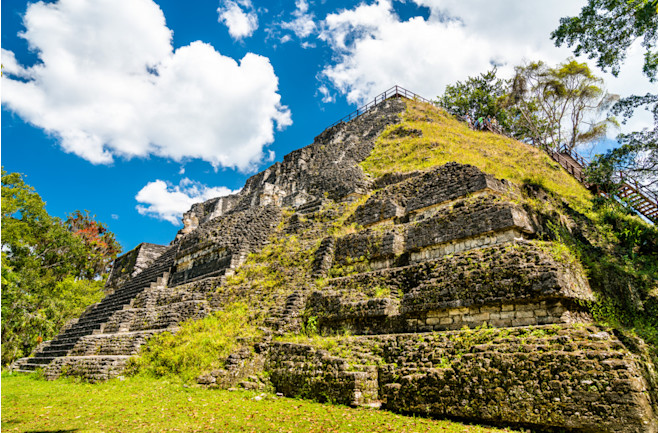
Ancient Temple at Tikal in Guatemala. The sophisticated structures and buildings of Tikal are buried under thick blankets of dirt and vegetation
Until they're uncovered, the sophisticated structures and buildings of Tikal are buried under thick blankets of dirt and vegetation. (Credit: Leonid Andronov/Shutterstock)

What Was Unique About Mayan Architecture?

Hidden in the jungles of northern Guatemala, about 30 miles away from the border with Belize, Tikal was originally occupied between around 300 and 900 B.C.E. That being said, the city's biggest buildings came centuries later, between about 600 and 900 C.E., when the Maya were at the height of their power. The city, whose name means “at the watering hole,” is thought to contain more than 4,000 buildings, the vast majority of which remain unexcavated.

The buildings, organized around squares and plazas, come in many different shapes and sizes, ranging from large to downright colossal. While the small, wooden homes of ordinary Maya citizens have long been lost to time, the palaces they raised for their kings — multi-storied and surrounded by towers and courtyards — are still standing.

What Were Mayan Pyramids Used For?

Also standing are the pyramids, similar to their Egyptian counterparts in basic design but different in finish. Constructed at a slightly steeper incline, their exterior is as richly decorated as the rooms inside. Mayan pyramids were mainly used for religious purposes, and tombs for dead leaders. Tikal even had several courts for playing tlachtli or pok-ta-pok, a traditional Maya ball game where players used only their elbows, knees, and hips.


Ancient Ruins at Tikal in Guatemala, still standing from advanced architectural knowledge
The ruins of Tikal are still standing, researchers say, thanks to the Maya’s awareness of their surroundings and their advanced architectural knowledge. (Credit: Leonid Andronov/Shutterstock)

Why Was Maya Architecture So Long-Lasting?

With all that in mind, what allowed the Maya to make their structures so strong?

1. A Strong Location

The durability of Maya architecture could have several explanations, the first of which concerns location. Deeply familiar with the terrain, the Maya constructed their biggest settlements in places that were mostly safe from natural disaster, with the surrounding swampland insulating Tikal from 1976’s worst aftershocks.

But while swamps provide protection from earthquakes, they are also prone to flooding. The Maya addressed this problem with careful urban planning, placing their buildings on elevated ground so that they would remain dry during the rainy season.

2. A Sturdy Structure

A second explanation for the durability of Maya architecture has to do with the Maya’s knowledge of engineering. Pyramids are among the most stable and earthquake-resistant structures ever produced, rivaling Roman domes. This is because each layer is larger and heavier than the one above it, according to a 2020 analysis, preventing the structures from falling over or collapsing in on themselves.

3. A Recipe for Resilience

If location and engineering form the first two parts of the equation, material would be the third. Restricted to the natural resources that would have been available to them, the Maya made their buildings out of limestone, which they reinforced with a technique called lime pyrotechnology.


Mayan Architectural Techniques

By burning the limestone to temperatures of over 1650 degrees Fahrenheit, Maya builders created quicklime — a sturdy compound that hardens when exposed to CO2.

A paper published in 2018 states that the Maya discovered pyrotechnology as early as 1100 B.C.E. By the time Tikal entered its glory days, the city consisted of buildings so tough, they could withstand a millennia of exposure to the region’s tropical climate.

In addition to their pyrotechnology, the Maya peppered their lime plaster with ingredients from the environment. Studying the architecture of the Maya ruins of Copán, south of Tikal, and consulting indigenous people in the area, a team of mineralogists from the University of Granada in Spain found in that Maya builders infused their quicklime with the sap of two native tree specieschukum and jiote.

Recreating Mayan Plaster

Operating under the assumption that these biological additives served a practical purpose, as opposed to a ceremonial purpose, the mineralogists made their own, replica mix of Maya plaster, allowing them to put its structural integrity under a microscope.

According to the team's 2023 analysis, that assumption was confirmed. Once added, the tree sap was “absorbed on and occluded in the mesostructured calcite crystals making up the cement matrix of the plasters.” They concluded that “these organics profoundly affect" the structural traits of the substance, “rendering the plaster more resistant to physical and chemical weathering.”


Other Remarkable Uses of Ancient Architecture

It’s worth noting that the Maya weren’t the only civilization to enrich their plasters and mortars with things taken from their direct environment. Over the years, researchers have found ancient structures that contain traces of materials as diverse as milk, cheese, beer, and even urine. The mortar of China’s Great Wall and Forbidden City was made with starch and sticky rice, while the Roman architect Vitruvius, in his book De Architectura, recommends cooking oil as a means to make lime waterproof.

Trial and Error Engineering

Ancient architecture was a field of experimentation, and not all of these unusual ingredients were equally useful.

Sometimes materials were thrown in at random just to see what they would do. At other times, builders worked with intention, guided by experience and understanding. This seems to have been the case in India, where inlanders used herbs to help their mortar withstand moisture, and where the coastal dwellers routinely added unrefined sugar to protect buildings against the corrosive effects of sea salt. Maya use of chukum and jiote sap seems to have been similarly intentional.


Why Is Ancient Architecture Important?

Ultimately, studying the chemical composition of ancient architecture can help improve its modern counterpart. Although Maya, Indian, and Roman materials could never be applied to the construction of skyscrapers — a flat made from Roman concrete, University of Victoria archeologist John Oleson once said in an interview, “would collapse when you got to the third story” — their now-unorthodox techniques can inspire engineers to make important breakthroughs.

The stronger a building, the longer it will last. And in architecture, posterity is always an objective.


Wednesday, December 20, 2023

13 World’s Most Dangerous Chemicals | Dare To Know?


Chemicals can be found practically everywhere. Most are harmless or necessary for life, but some will soon rob you of your life if not handled with caution.

It’s our death-star chemical squad. Along with a few chemicals that could be in your home, we have several ancient toxins that have cruelly taken the lives of millions of people. Experiencing even a tiny amount of any of them will have you scrambling to jot down your life goals.

There are many chemicals in use today that have the potential to be fatal or seriously harmful. Here we’ll look at 13 of the most hazardous compounds, preferably ones you have never come into contact with.

1. Dimethyl Cadmium, the Most Dangerous of All Chemicals

Dimethyl cadmium has been known to be the most hazardous chemical in the world and is nearly never safe to be around. Even a few micrograms of it, which evaporates quickly at ambient temperature, can be hazardous if inhaled.

The chemical enters the bloodstream and goes to various organs, removing electrons from cell membranes. Additionally, it is carcinogenic, meaning that any cells that aren’t destroyed the first time can develop cancer.

Dimethyl cadmium is flammable and deadly when it is liquid, but it may also dry out into a highly explosive crust that is also very unstable. It explodes in brief blasts if it falls into the water. It also stinks, so if you’re ever exposed, you’ll have an olfactory clue that you’re about to die.

2. Sodium Cyanide Is An Instant Killer

Sodium cyanide is frequently employed as a reactant in industrial processes. It smells like almonds, but if you get too close to it, you’ll die in a matter of seconds.

Source: NG HAN GUAN

Cyanide prevents mitochondria from using oxygen by binding to the protein cytochrome c oxidase.
Many notable Nazis, including Adolf Hitler and Eva Braun, are thought to have used cyanide to commit suicide or cover their tracks from prosecution, including Alan Turing, who may have committed suicide by eating or ingesting a cyanide-laced apple.

The onset of symptoms can be rapid after ingestion, and death can occur within minutes. A lethal dose can be administered in a matter of seconds. Algae, fungi, spinach, almonds, lima beans, and peach pits are just some of the many natural sources of this molecule. However, they contain very small amount of cyanide, which makes them safe to eat.

3. The Piranha Solution: Junking It Up

If you’re looking for a stomach-churning YouTube video, try searching for “piranha solution dissolving chicken legs.” You’ll see how swiftly and thoroughly these powerful acids dissolve flesh.

Source: Periodic Videos/ Youtube

Meat may be removed from bones in minutes with piranha solutions. In addition to being more effective than a pure acid at removing organic material, it will also peel away the bone entirely if submerged.

The infamous “Piranha Solution” combines sulfuric acid and hydrogen peroxide in a ratio of three parts per one. The Piranha Solution notoriously removes all traces of biological material within no time.

4. Nicotine is Toxic, More Than You Thought

Plants produce nicotine as a defense strategy against herbivores. Because of this, it ranks among the worst poisons ever discovered.

Not only is it highly addictive at even relatively modest dosages, but it is also lethal at sufficiently high ones. Five micrograms per cubic meter of air (mcg/m3) of nicotine are considered “immediately harmful to life and health” by the National Institute for Occupational Safety and Health.

5. Dioxygen Difluoride Ready For Explosion

Dioxygen difluoride, sometimes known as FOOF, is a very reactive chemical that has generally proven far too toxic for scientists to work with. One article reported that it is most stable around 90 Kelvin, which is roughly -180 C and -300 F, although even at such temperatures, it is questionable whether it is entirely risk-free. This stuff goes boom at room temperature.

According to the same paper, it will spontaneously combust if it comes into contact with solid ethyl alcohol. A single drop of it ignited upon contact with methane at 90K, and a mere 0.2 mL of the gas caused an explosion at temperatures far below anything you’d find on Earth.

FOOF was subjected to a variety of environments and chemicals. The response was always the same: an explosion.

6. Strychnine Allegedly Killed Alexander the Great

Assassins and poisoners have relied on strychnine for a long time. It is most commonly used to eliminate bothersome insects, but it can also destroy the lives of humans.

Source: newtondesk

Many renowned people, including Alexander the Great and Robert Johnson, the father of blues music, have been linked to its use as a murder weapon.

7. Batrachotoxin Is Extremely Hazardous To Life

Compounds that can cause death can be found all over the world. Some substances are only deadly after being exposed to them for a long time, and others are horrifyingly hazardous, even in tiny doses. One such chemical is batrachotoxin.

Source: coolmaterial

Batrachotoxin, the deadly poison that dart frogs produce, only needs a dose the size of two grains of salt to kill a 150-pound adult. That equals 136 micrograms. Only around eight dosages would fit into the body of a single small frog.

You can see why native hunters from the same part of the world where the frogs live used the poison. The venom produced by only a few of these frogs would be enough to kill 20,000 mice.

8. VX Nerve Gas Can Turn You Off For Good

VX gas was used in The Rock (1996). The film’s toxic chemical was natural. It’s real and deadly. It’s the world’s most potent nerve agent, causing many unpleasant consequences.

In 2022, the US destroyed 30,000 tons of VX, Sarin, and mustard gas. In 2017, a milligram was used to kill Kim Jong-half-brother.

VX can cause eye pain, diarrhea, drooling, and vomiting within seconds. Neurotoxin VX prevents your muscles and glands from “going off,” causing overstimulation, weariness, and an inability to breathe, leading to paralysis and death. Death can occur in minutes, depending on exposure.

9. Sarin Gas May Kill In Minutes

Sarin is a highly potent nerve agent that will kill exposed people in less than 10 minutes. When inhaled, it paralyzes the lungs, causing the victim to suffocate to death.

Numerous authorities commonly recognize Sarin as a potential weapon of mass destruction. To this aim, its manufacturing and stockpiling were prohibited by the Chemical Weapons Convention of 1993 and categorized as a Schedule 1 material.

10. The Oddly Explosive Azidoazide Azide 

Science has invented many things that go boom, including TNT and C4. Acid azide’s formula, C2N14, has a lot of nitrogen. It’s among the most explosive chemicals ever found. No one has accurately measured how explosive it is because it always goes off. This makes it hard to know if it is the most explosive material in the world.

Source: shutterstock

Even scientists trained to handle unstable substances with sensitive equipment can’t measure this compound’s explosive potential. It booms when moved. When dissolved, it explodes fiercely. Detonation occurred when its infrared spectra were analyzed.

11. Ricin Is A Toxic Substance.

Ricin has a well-deserved reputation for being an extremely lethal substance. However, it is not hard to find in the seeds of plants that produce castor oil.

Source: latimes

It is a potent poison, and a dose as small as a few grains of table salt can cause instantaneous death in a human being. Some preliminary research was done on ricin’s possible military applications for a while, but eventually, the focus shifted to developing Sarin as a weapon.

12. Chlorine Trifluoride, An Extremely Reactive Chlorine

Most of us won’t find chlorine trifluoride in nature, which is a good thing since it’s dangerous. One of chlorine trifluoride’s most well-known properties is its corrosion of glass. It is a substance known as an interhalogen compound, which is colorless, exceedingly corrosive, and reactive.

Source: Shutterstock

It can only really be stored in metal containers that have been fluorine-treated because it is primarily utilized as a component of rocket fuel. This toxic substance reacts violently and explosively with water.

Its military uses were obvious. Easy-to-make bombs and flamethrowers may be abundant. It was inexpensive, easy, and effective, but only 30 tons were made since it was unstable and dangerous. In the 1950s, 1 ton of CTF leaked. It burned a foot of concrete and three feet of gravel, releasing acid.

13. Botulinum Toxin A, Botox Beauty Can Paralyze

Botox, or botulinum toxin A, is a widely used cosmetic drug that also happens to be one of the most poisonous substances in the natural world. Clostridium botulinum and similar types of bacteria produce this hazardous protein.

As little as 1.3–2.1 ng/kg put into a human being would be fatal. You may be wondering why it is employed for such procedures. It paralyzes muscles when taken in small amounts, so it can be used to get rid of wrinkles and stop spasms.

How To Safely Store Dangerous Chemicals?

Dangerous chemicals can be safely stored using the following:

  1. Specialty storage containers.
  2. Secondary containment systems.
  3. Climate-controlled storage.
  4. Secure storage and proper labeling.
  5. Emergency response plans.
  6. Professionally trained personnel comply with safety regulations and standards.

FAQs

Is there a single chemical that kills more people than any other?

Some substances are more likely than others to kill, but many contenders exist. The botulinum toxin, however, is among the most lethal toxins known to man. The Clostridium botulinum bacterium produces botulinum toxin, which is also utilized in cosmetic surgery.

Which gas is the most hazardous in the world?

It’s hard to say which gas is the most dangerous in the world because the danger of a gas depends on a lot of things, like how toxic, flammable, or reactive it is.

Some gases that are particularly hazardous include:

  • Chlorine gas is highly toxic and can cause respiratory distress or death.
  • Phosgene gas can cause chemical burns and respiratory failure.
  • Hydrogen sulfide gas is highly toxic and can cause death in high concentrations.

When working with gases, it is imperative to be careful and follow all safety rules.

What are some of the most lethal chemicals?

Many hazardous chemicals can kill you if you eat, drink, or inhale them. Some examples include:

  1. Cyanide: This chemical can be found as a gas, liquid, or crystal. It is highly toxic and can be lethal in small amounts.
  2. Ricin: This toxic protein is found in the seeds of the castor oil plant and can be lethal if ingested or inhaled.
  3. Botulinum toxin: This poison is produced by the bacterium Clostridium botulinum and can cause severe respiratory illness and death.
  4. Sarin: This chemical is a nerve agent that can be lethal if inhaled or absorbed through the skin.
  5. VX: This chemical is a nerve agent that is highly toxic and can be lethal in small amounts.

It is important to note that these chemicals are highly regulated and not readily available to the general public. They are typically only found in research laboratories, military stockpiles, or other specialized settings.


Monday, December 4, 2023

What Happens If a Plane Gets Struck by Lightning?


An electrical discharge that happens within a cloud, between two or more clouds, or between a cloud and the Earth’s surface is known as a lightning strike. Nobody wants to fly in extreme storms. Even while it may seem unlikely, lightning strikes planes are far more often than you may expect.

Lightning strikes the Earth around 40 to 50 times every second around the world. It is also known that, on average, more than 100,000 commercial planes take off every day around the world. This means there is more than 1 plane taking off every second!

These numbers show that the probability of lightning striking an airplane is very high. Despite this, no planes have fallen from the sky due to a lack of electricity. Lightning may be dangerous, but how harmful is it to a plane and its passengers? What happens when lightning strikes an aircraft? And what measures do airplanes have to counter lightning strikes?

Accidents of Lightning Striking Planes

According to experts, lightning strikes airplanes on average once per 1,000 hours of flight time.

The last time a lightning strike caused a major disaster was in 1963. In Maryland, the United States, 81 people were killed when a Pan American Boeing 707 got struck by lightning.

It was found that the ignition part that is responsible for the ignition of the gasoline/air combination in the fuel tank was faulty. After the explosion, the outer left wing was lost, and the pilots lost control of the aircraft.

After take-off or landing, most aircraft is struck by lightning at an altitude of between 1,524 and 4,572 meters (5,000 to 15,000 feet). Another element that enhances the likelihood of lightning is the existence of rain in the area. Several systems cannot be rebooted in mid-air; therefore, if lightning strikes an airplane after take-off, it is normally returned to the airport from which it left.

Spring and summer are the most common seasons for lightning strikes. Lightning strikes are less likely to occur at heights greater than 20,000 feet (6,096 meters). Geographical conditions have a role as well, of course. For example, it is more prevalent in the equator than in the Nordics and Florida than on the West Coast of the United States.

Despite the fact that some passengers may find it an uncomfortable experience, modern airplanes are built to withstand lightning strikes. As part of their certification, they are subjected to a series of lightning tests.

How Dangerous is the Lightning Strike for the Airplane?

In most circumstances, lightning strikes on planes do not cause considerable physical damage or affect the plane’s safety. Lightning is more likely to strike the wingtips or the nose of an aircraft.

Source: lucaas / YouTube

Afterward, the charge goes through the plane’s metal and exits at a different location, like the tail. It will then go to the other side of the cloud structure. However, if it cannot locate an opposing polarity, it will instead strike a spot on the Earth.

Passengers and crew onboard the airplane may experience a flash and hear a loud blast if the plane is caught up in the cloud-to-ground lightning event. Damage to the plane is determined by various parameters, including the amount of energy discharged during the hit, the position of the hit, the exit points, and the duration of the strike. A single flash of light may deliver up to 30,000 amps or one million volts.

When lightning strikes, it can damage the avionics, including the radar, transmission, and antennas, but it can also penetrate the fuselage and leave a tiny hole in the tail. Additionally, lightning flashes can temporarily blind the flight crew, particularly at night.

In more extreme circumstances, engine shutdown can occur. Occasionally, following a lightning strike, one or more generators may fail, resulting in the loss of cabin lighting.

How Do Airlines Protect their Planes and Passengers?

When a lightning strike occurs, it has the potential to disrupt airline operations, resulting in unnecessary delays and cancellations, and of course, it might lead to the loss of the crew and passengers. In order to avoid such events, maintenance workers must be well-versed in lightning protection, inspection, and repair techniques.

Source: boeing

The typical approach for pilots is to stay at least 20 nautical miles away from cumulonimbus (dense cloud location) cloud formations. In addition, new airplanes are engineered to enable lightning to pass over the plane’s surface without causing any harm.

Source: Halldor Gudmundsson

Those are some of the safety guidelines that pilots and maintenance workers are trained to perform. But what about the plane itself? And how does the composition of the plane helps in reducing and maybe eliminating the damage caused by the strike?

Plane’s Composition

As we all know, aluminum conducts electricity, and lightning is more likely to strike a plane’s nose or the tip of its wing. For this reason, these parts are usually made from composite material, even though the plane’s fuselage works as a Faraday cage, shielding the cabin from the voltage as it travels along the container’s exterior.

Wing of the Airbus A220 made with carbon fibers
Source: Teijin

The use of composite and metal components is becoming increasingly common in modern airplanes. The fuselage of the Boeing 787 Dreamliner, for example, is 50 percent composite in weight. 53 percent of the A350 XWB’s airframe is constructed of composite materials.

In contrast to metal, composite materials like carbon fiber laminate do not transmit electricity. As a result, lightning-strike-prone composite parts must be equipped with supplementary lighting precautions. A layer of conductive fibers such as copper foil mesh is used to direct the flow of electricity.

Protect the Fuel from the Spark

It is critical to safeguard gasoline and other combustible compounds from sparks. Lightning bolts may cause serious damage to airplane fuel tanks if they get too close to them. Vents, access doors, and caps must be certified to meet lighting protection regulations.

Source: Sofema Aviation Services

A bolt of lightning may reach temperatures of up to 30,000 degrees Celsius. However, none of the surrounding metal, structural joints, access doors, vents, or fuel filler caps on an airplane are at risk of being damaged.

These concerns became the norm after the accident of the Pan Am 707 explosion in 1963 that we have already mentioned. An unprotected fuel tank caused the gasses to ignite due to the violent lightning strike. New fuels with fewer harmful fumes have also become commonplace in the airplane industry.

Flying an aircraft that has been struck by lightning requires the pilots to do a thorough check of all systems. Any problems should be resolved by making an emergency landing at the nearest airport.

However, even if the plane reaches its final destination unharmed, its maintenance staff will carefully inspect it upon arrival for any damage. The sites where the lightning entered and exited the fuselage may have developed little holes of less than a centimeter in diameter.

Conclusion

Yes, it is true that lightning strikes on planes are quite common, but nowadays, every modern airplane has been extensively examined and certified to withstand such accidents.

However, even with all these advanced technologies and protection for the plane, the likelihood of extreme turbulence makes it impossible to fly above, beneath, or through storm clouds.

So the next time you have a trip in a bad weather conditions, don’t get afraid of a lightning strike passing through the plane and causing it to explode. The aircraft industry has developed so much over the years, reaching a very high level of safety and protection.

This is What Happens if a Plane Window Breaks While Flying

Source: Shutterstock / The Telegraph

Even though it is considered a rare case, it has happened multiple times during commercial airline history. Breaking a window in an airplane is something that might seams not dangerous to many, but in reality, it is.

Windows breakage might happen due to multiple reasons. Whether it was due to an accident or some passenger trying to experience something new, it still has a devastating effect on the plane’s crew if not a smart action is taken immediately.

In the below sections, we will discuss multiple accidents that happened in history and find the reasons that caused them. We will also see scientifically what happens exactly on the plane when the window is broken. What dangers might arise to the passengers, crew and the plane itself? And how should you react if you happen to be there?

Real-Life Stories

Broken windows accidents actually happened multiple times and on different airways. This was not limited just to passenger windows. This indeed also happened with the pilot’s frontal windows!

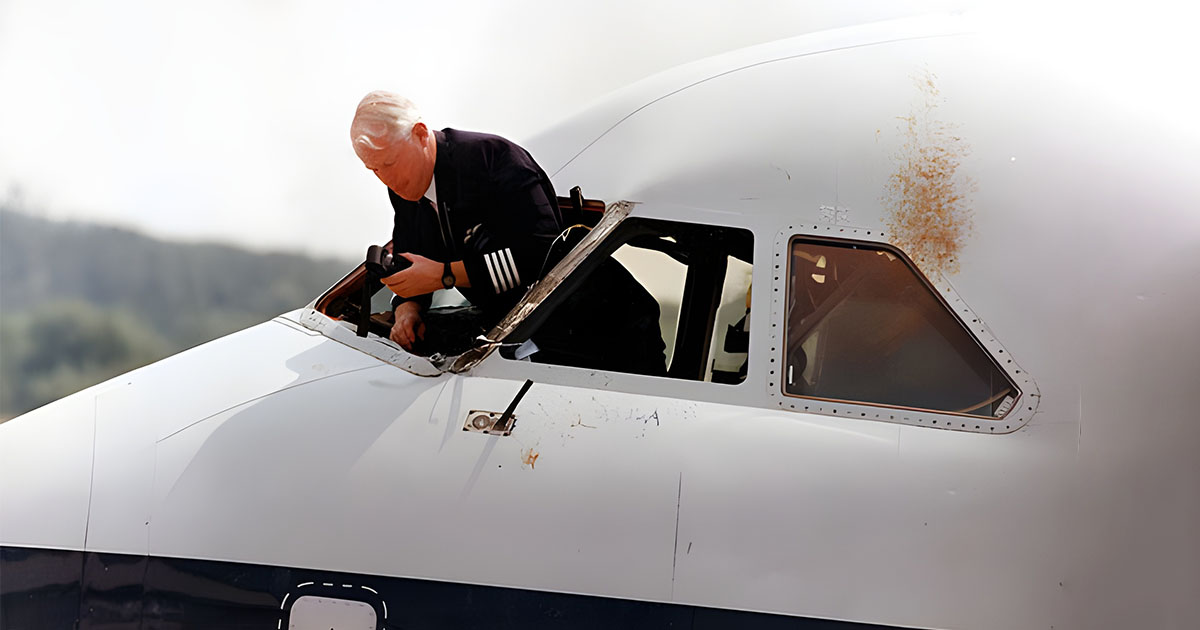
British Airways Flight 5390

Source: Shutterstock / The Telegraph

On June 10, 1990, a trip took off from Birmingham Airport in the UK, heading towards Malaga’s Airport in Spain. The plane departed at 8:20 local time, taking on board 81 passengers along with the 4 crew members.

13 minutes later, the plane was over Didcot in the UK, and the pilot and the co-pilot were waiting for the meal. When the hostess was entering the cockpit, she heard a loud bang.

The left windscreen panel was open, and the captain was partially sucked out of the plane! His crew members reacted quickly and saved him. The co-pilot took the responsibility and landed the plane 15 minutes later at Southampton Airport.

The plane was not equipped with oxygen for everyone. So the co-pilot began an emergency descent immediately to reach an appropriate altitude. Even the communication with the airports was difficult due to wind noise.

The pilot was taken to the hospital suffering from fractures in his right arm, left thumb, and right wrist.

Sichuan Airlines Flight 3U8633

Source: CCTV / twitter

Another story that looks similar to the first happened on May 14, 2018, when a plane took off from Chongqing to Lhasa on a domestic trip inside China.

It was suddenly when the right windshield blew away at an altitude of 32,000 ft. The co-pilot was sucked halfway out of the window. The co-pilot was pulled back inside with the help of the crew members. He and another crew member were injured, but none of the 119 passengers.

The plane made an emergency landing in the southwest city of Chengdu.

Southwest Flight 1380

Source: FOX 5 DC / twitter

This time it is a story that happened with the passenger windows, not the pilot. This happened on April 17, 2018, on a trip from New York to Dallas when a rare engine explosion caused a passenger’s window to burst.

At an altitude of over 32,000 feet, the woman sitting next to the window was pulled out of it. Other passengers quickly reacted and pulled her back into her seat.

The plane was carrying 144 passengers and 5 crew members. The plane made an emergency landing in Philadelphia, but the passenger was dead.

Why does this happen?

If you are asking about the windows breaking, this is a rare accident that could be caused by multiple factors. A flying bird, a faulty window, or even an engine explosion as in the third story.

However, the interesting common thing in the 3 stories is the suction of the person sitting next to the window. Why does this happen?

When a window breaks at a high altitude in the plane, you’d hear a booming noise resulting from depressurization. Basically, the cabin air pressure is greater than the air pressure outside the plane in order to allow passengers to breathe comfortably.

The plane usually flies at altitudes between 30,000 to 40,000 feet. Air pressure outside the plane at these altitudes will be just 4 to 5 PSI. On the other hand, the pressure inside the plane will be between 11 – 12 PSI.

A broken window would cause the air inside to rush out rapidly, causing little objects like phones and magazines (and even larger ones, like people) to be carried away. This is all due to the high-pressure difference at high altitudes.

It’s also possible to experience lower temperatures and lower air pressure and mist or fog from condensation inside the plane.

Conclusion

Source: Marty Martinez, via Associated Press

The most essential thing to remember in this scenario, as in many others, is to remain calm. As a safety precaution, wear your seat belt at all times when seated. Make sure you put on your own oxygen mask before helping your child or other persons around you. Plane crew members will begin an emergency landing, and the plane will descend quickly to avoid passenger injury.

Traveling by air is one of the safest modes of transportation, and it’s only going to become better. On the other hand, depressurization emergencies are extremely unusual, and just 2.7% of all pressurization failure incidents are caused by a window.