Why Do Metals Conduct Electricity?
Have you ever wondered why metals conduct electricity? Perhaps you’ve wondered why metals (and water) are some of the only electrical conductors you encounter in daily life?
In this post, I will explain why metals are such good electrical conductors, and also explain how nonmetals like water and glass can also become conductors.
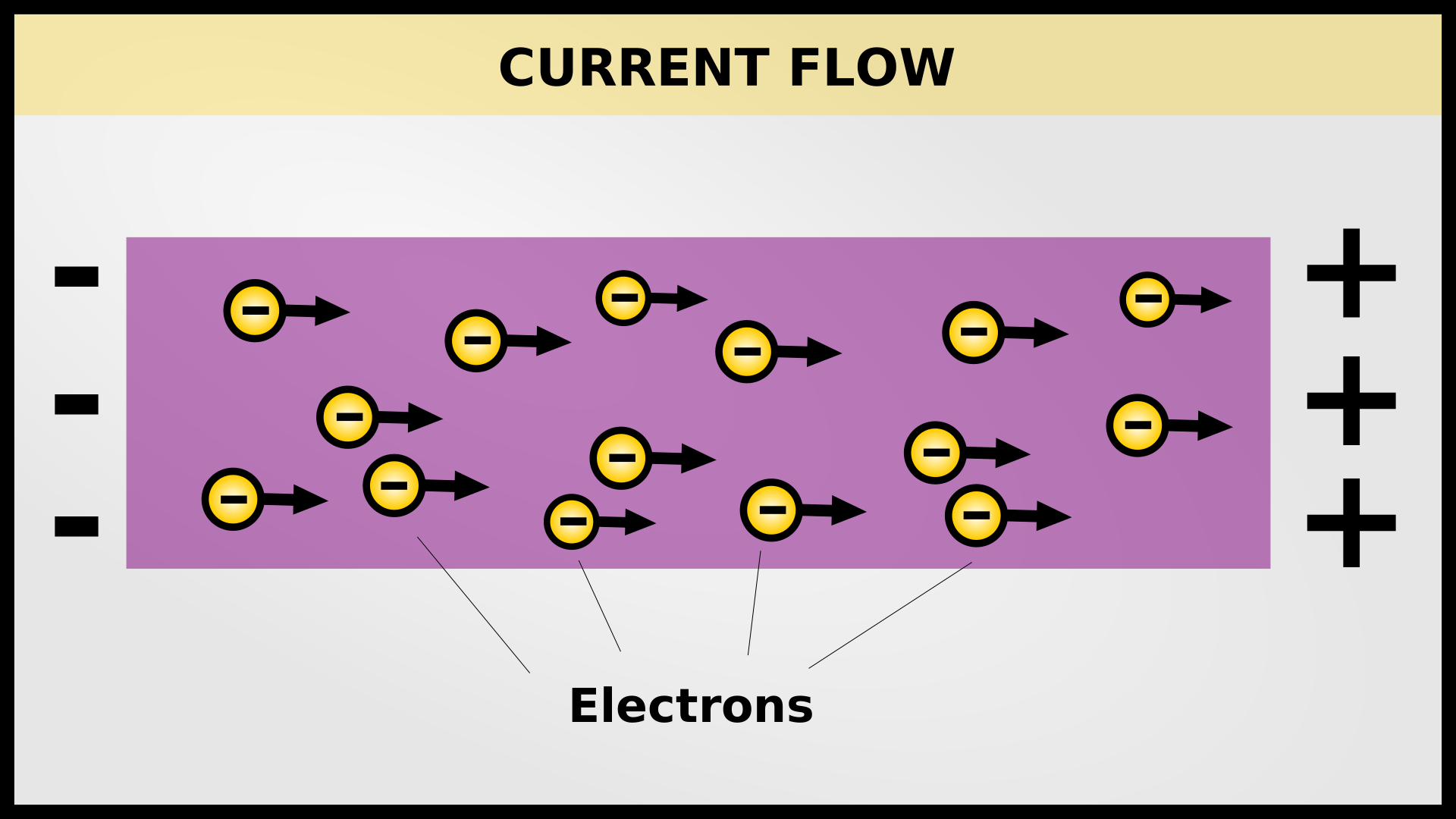
Metals conduct electricity because they have “free electrons.” Unlike most other forms of matter, metallic bonding is unique because the electrons are not bound to a particular atom. This allows the delocalized electrons to flow in response to a potential difference.
Outline
Metallic Bonding
I’m going to be honest, I never fully understood metallic bonding until grad school (do I even understand it now??)
In high school and undergrad, any time I saw a question about metallic bonding, the answer was always “because metallic bonding has a sea of electrons.” So the short answer is “metals conduct electricity because they have a sea of delocalized electrons that are free to leave as soon as they feel a voltage.”
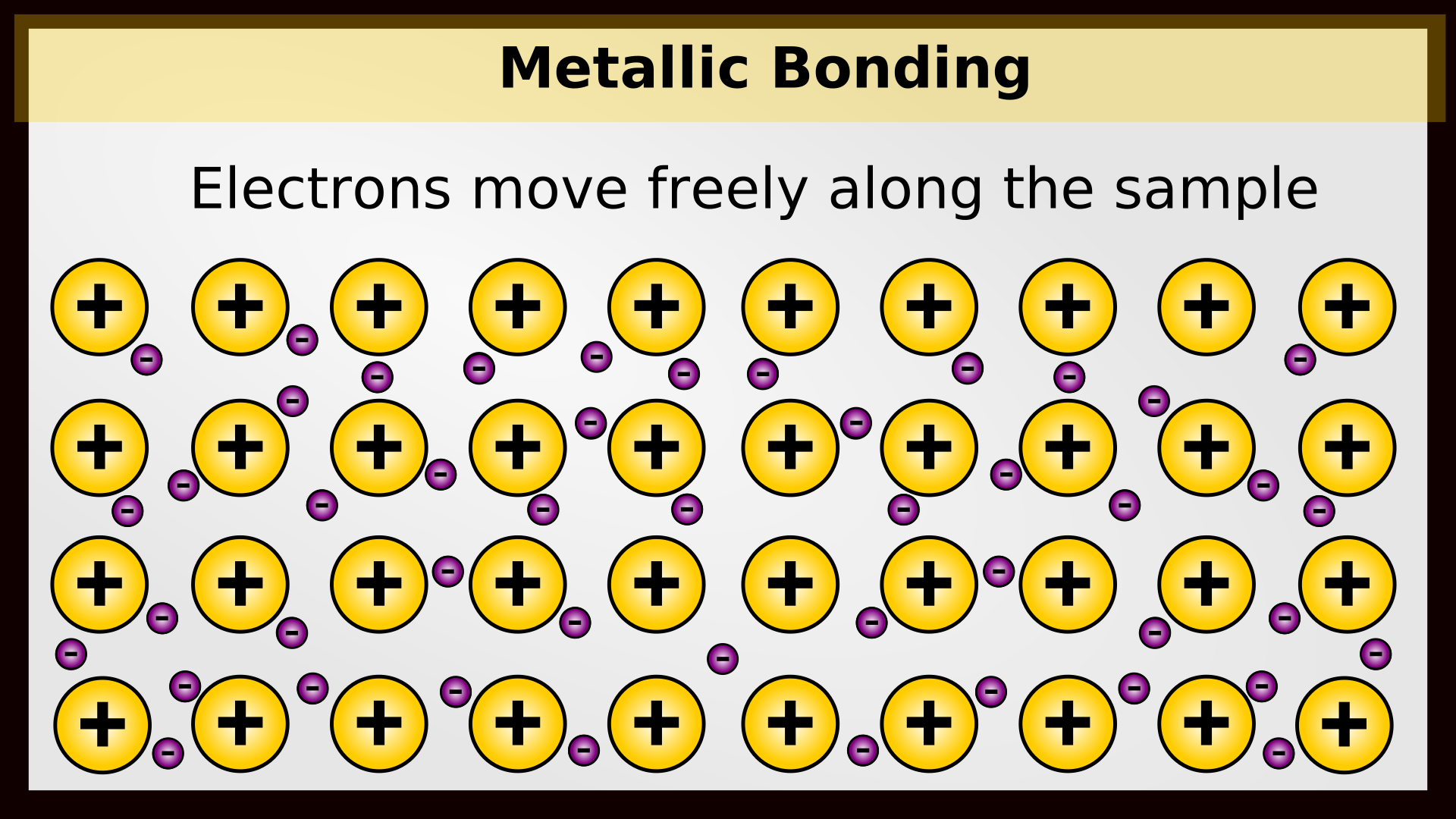
What does that mean? And why do metals have this “sea of electrons” when other materials don’t?
Because of quantum interactions, metal atoms all share their outer electron. Rather than electrons orbiting a specific atom, the electrons roam all over the group of metal atoms. It is kinda like super-covalent bonding–instead of sharing electrons between 2 atoms, they are shared among all the atoms.
The “electron sea model” is the best way to describe this phenomena. As you’ve probably learned, the metal atoms are aligned in a repeating pattern (a crystal structure), and the space between and around these atoms are filled with electrons that can freely move.
Just as metal ions give up electrons to a different atom in ionic bonding, the metal ions give up those same electrons to the electron sea in metallic bonding. Na+ means that a piece of sodium will have 1 electron in the electron sea, per Na atom. Al3+ means that aluminum metal will have 3 free electrons per aluminum atom. If you’re interested, this video illustrates the electron sea model and more.
Metallic bonding holds together because of electrostatic forces: each atom is positively charged and the negatively charged “sea” acts like glue that binds atoms together.
This bonding is why metals have so many shared properties, such as
- malleability
- ductility
- high melting point (especially true for transition metals)
- strength
- shininess
- thermal conductivity
- and electrical conductivity
Basically, metallic bonding is a unique type of bonding, arising from quantum-mechanical effects, that makes metals act like metals.
There is a lot of heavy math you can use to prove why metals have delocalized electrons, but at certain point, I just have to say:

Perhaps a more intuitive way to understand metallic bonding is by looking at band diagrams.
Band Gap
Band diagrams can help us understand conductors, semiconductors, and insulators. There are many features of the band diagram that are important to semiconductors, but for this article, you only need to know the band gap.
The band diagram shows the possible energy states for an electron. For a single element and electron, there are some very specific energy levels that the electron can exist in. If the energy is energized it can hop between these states, and if there is enough energy it’s even possible for the electron to leave the atom completely.
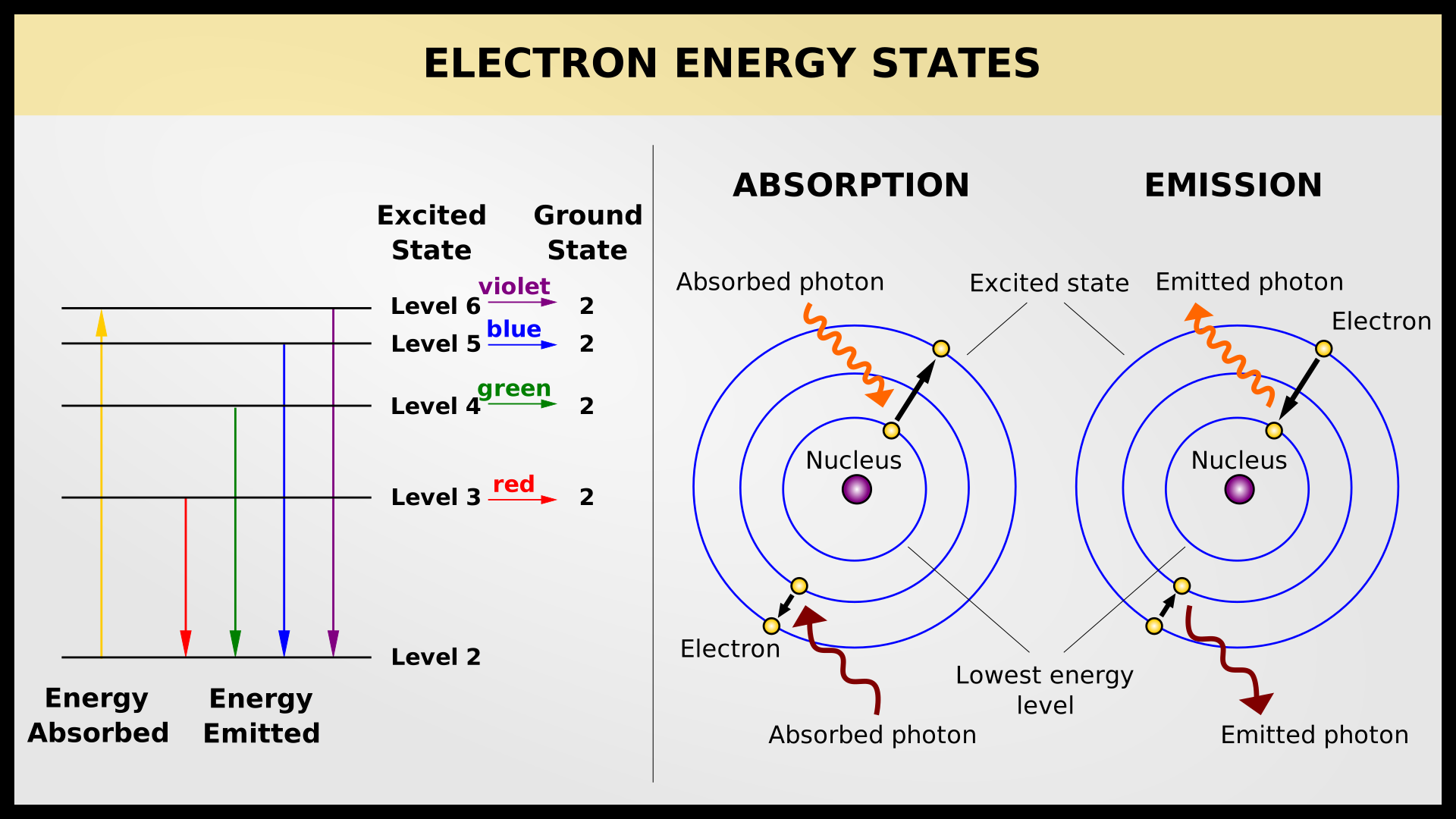
As you have a piece of metal with a terrifyingly large number of atoms and electrons, these allowed energy states for each atom basically merge into a “band” of continually allowed states. This is called the valence band.
Beyond the valence band is the conduction band. The conduction band is the collection of energy states where the electrons have enough energy to leave the atom that they’re bound to.
The band gap is the distance between these valence bands and conduction bands. The difference between metals, insulators, and semiconductors is the size of the band gap.
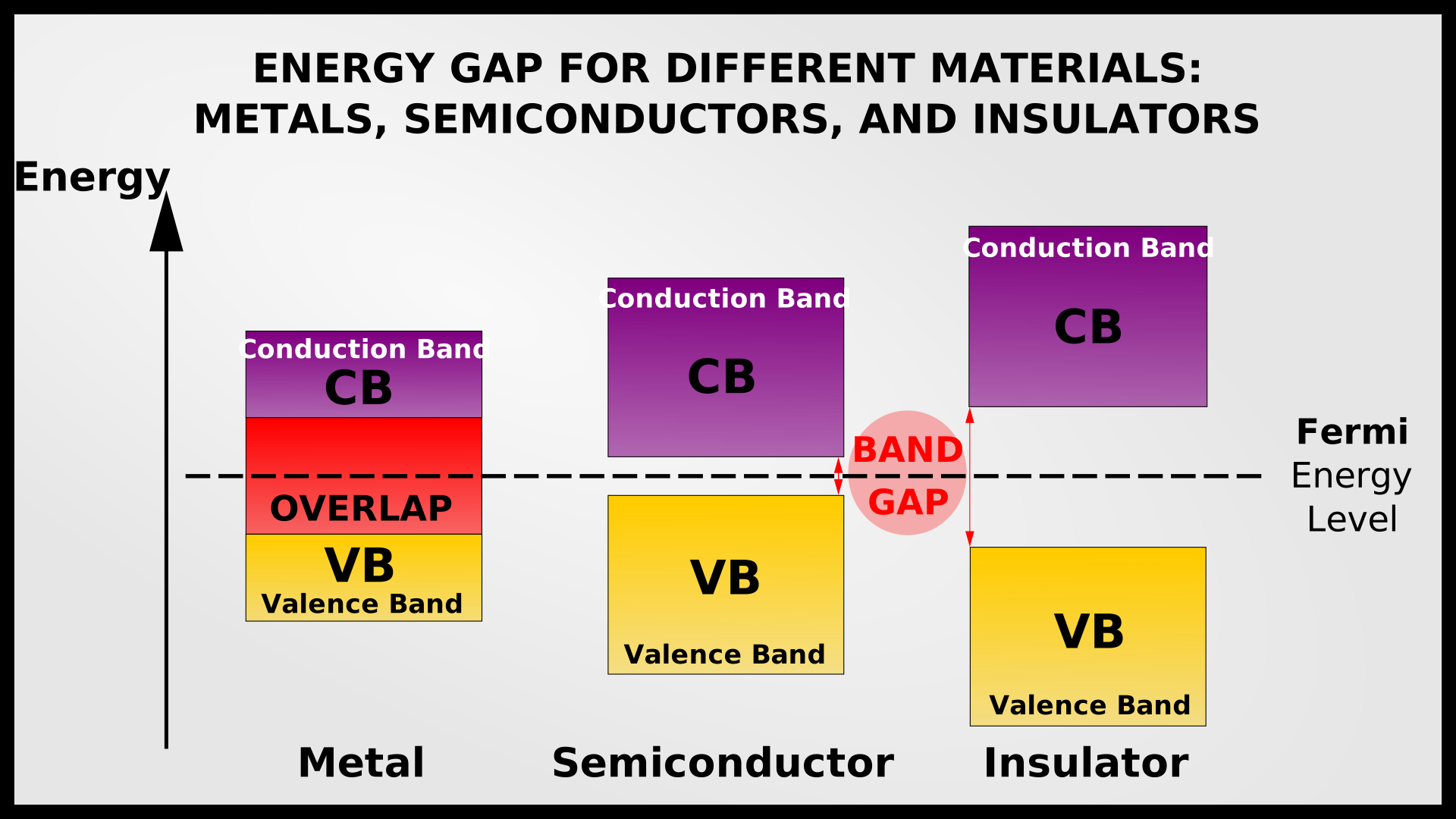
Metals have no band gap. In other words, the conduction band and valence band overlap, so an atom is not bound to any particular atom. If it has enough energy to leave, it just leaves.
Semiconductors have a small band gap.
This means that if the electrons don’t have enough energy to fully jump across the band gap, the semiconductor does not conduct at all. If there is enough energy to pass this barrier, the material conducts. Semiconductors are super useful because they can act as switches, either passing 0% or 100% of the current.
Insulators have a large band gap.
The distinction between insulator and semiconductor is a bit nebulous–it’s not like scientists have a simple value and if the band gap is larger than that value, it’s an insulator. These terms are practical–anything which is considered an insulator has a band gap that is too large to cross in a realistic scenario. Trying to pass too much current through many insulators will destroy the material before electrons have enough energy to jump across the band gap.
| Type of Material | Material | Band Gap (eV) |
| Semiconductor | Si Ge GaN GaP GaAs | 1.12 0.67 3.44 2.26 1.43 |
| Insulator | diamond PE (polyethylene) SiO2 | 5.47 8.8 8.9 |
Electrical Properties of Metals
The main electrical property is electrical conductivity.
Conductivity measures the amount of electrical current a material can carry. It can also be called “specific conductance” and is the inverse of resistivity.
Conductivity is given by the following equation.
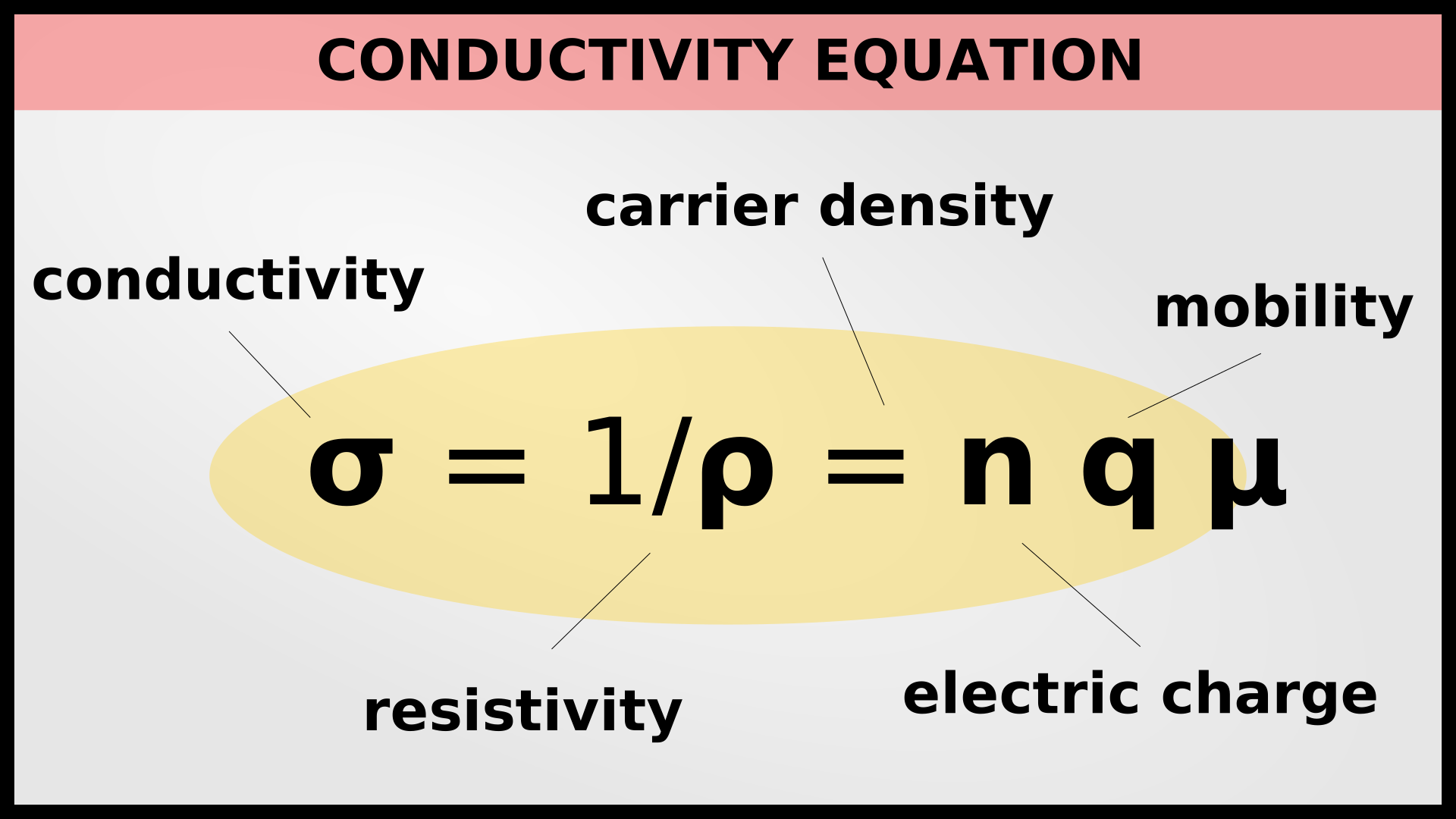
n is the carrier density–in other words, how many electrons exist per cross-sectional area.
q is the electric charge of each carrier–for electrons, this is -1.
 is the mobility, which is how quickly the electron can move through the material.
This equation was generalized for any situation involving electrical conductivity (including ion conduction), but in most cases the charge carrier is just electrons.
So conductivity is basically just how many electrons can squeeze through the wire in a given amount of time.
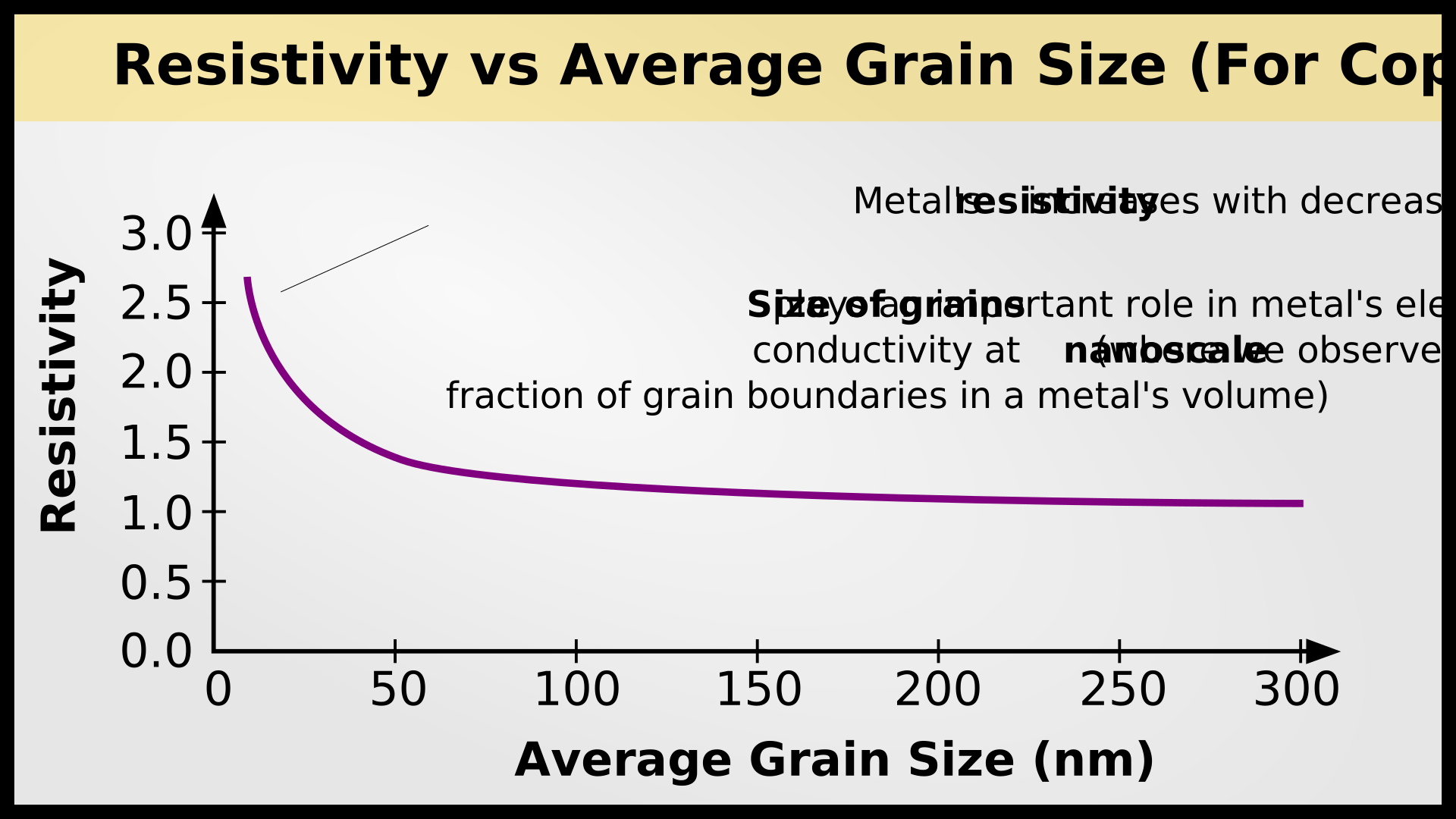
Usually, if engineers can change the conductivity of something, they are changing , the mobility of electrons. For example, grain boundaries can scatter electrons, reducing the speed they travel through the wire. Precipitates and alloying elements reduce conductivity for the same reason.
Some examples of high and low conductivity metals are given in the table below.
| Top 5 metals with the highest electrical conductivity | Conductivity σ x 106 at 20°C (S/m) |
| Silver (Ag) | 63.0 |
| Copper (Co) | 59.6 |
| Gold (Au) | 41.1 |
| Aluminum (Al) | 37.7 |
| Calcium (Ca) | 29.8 |
| Top 5 metals with the lowest electrical conductivity | Conductivity σ x 106 at 20°C (S/m) |
| Manganese (Mn) | 0.69 |
| Mercury (Hg) | 1.02 |
| Titanium (Ti) | 2.38 |
| Lead (Pb) | 4.55 |
| Niobium (Nb) | 7.00 |
Electrical Conductivity of Metals vs Temperature
The opposite of conductivity is resistivity (or resistance). Resistivity is the intrinsic version of resistance.

As temperature increases metals increase in resistivity (or decrease in conductivity).
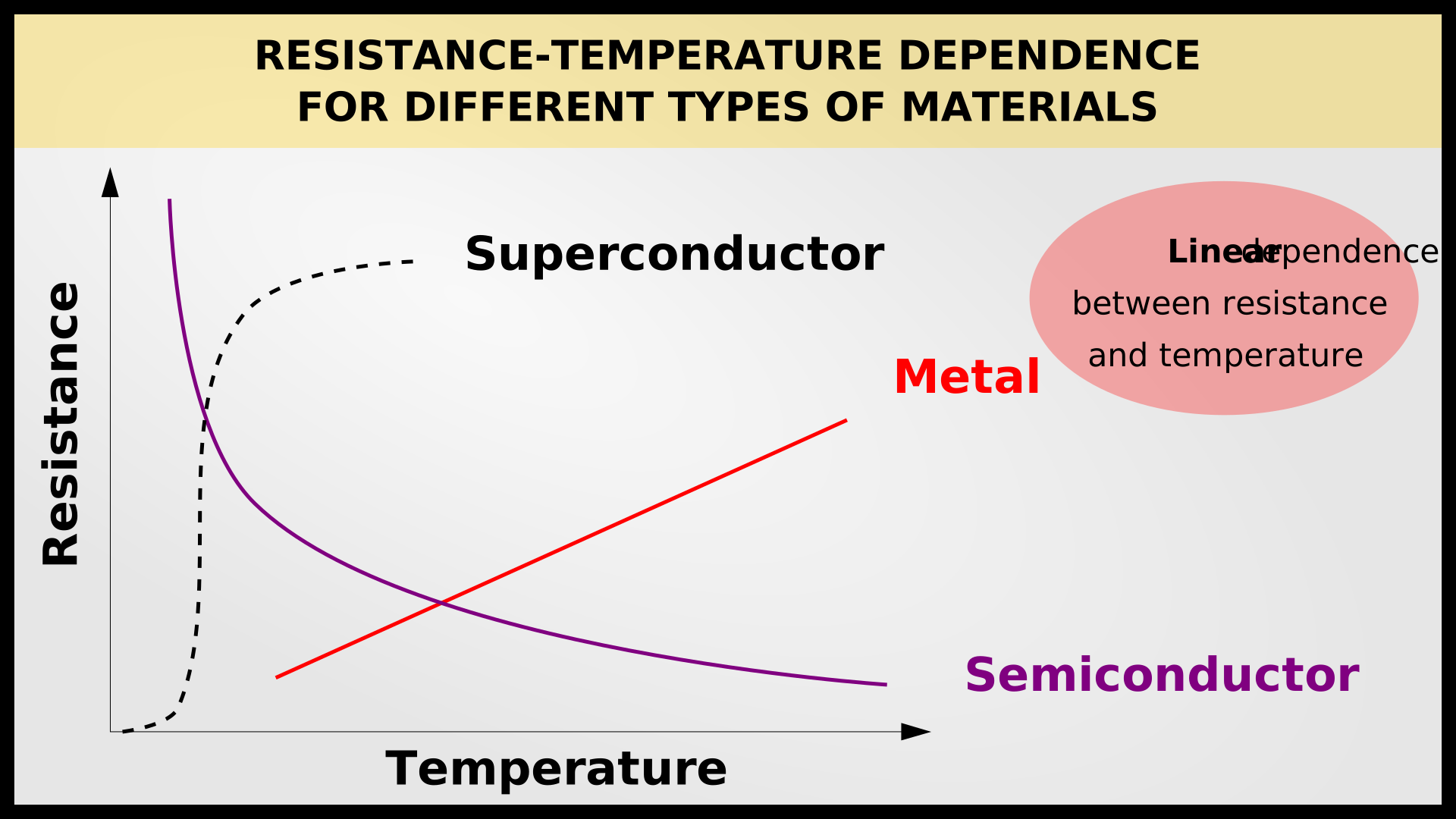
Increases in temperature causes a linear decrease in metals’ conductivity because of phonon-electron interactions. Since temperature is a measure of how quickly the atoms vibrate (we can call this vibration a “phonon”), increased vibration can interact with electrons passing through.
This impedes the electrons’ movement and reduces the electron mobility.
A very different logic applies to semiconductors!
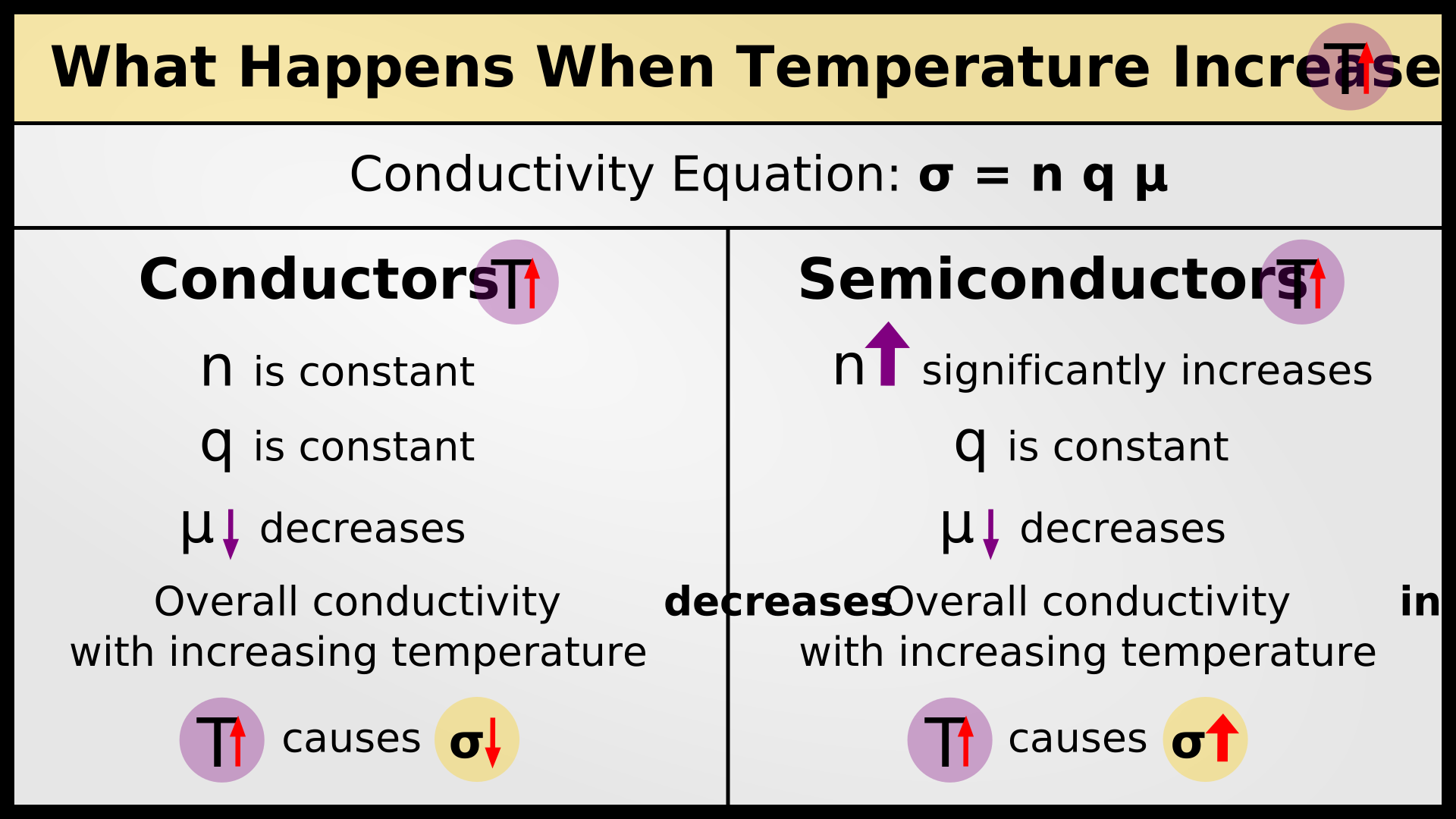
In fact, mobility is so important to resistance that at absolute zero, when lattice vibrations cease and electrons can pass through a metal unimpeded, metals can become superconductors.
Ways to Change a Metal’s Electrical Conductivity
There are many ways engineers can modify the electrical conductivity of metals, from changing the metal’s environment to grain boundary modification.
Shape
Shape is probably what you learned in high school, regarding conductivity. This doesn’t really change a materials intrinsic resistivity, but it does affect the extrinsic resistance.
Since resistance is the electrons that pass per cross sectional area, you can calculate resistance by multiplying resistivity by length of the wire, and dividing by the wire’s cross sectional area.
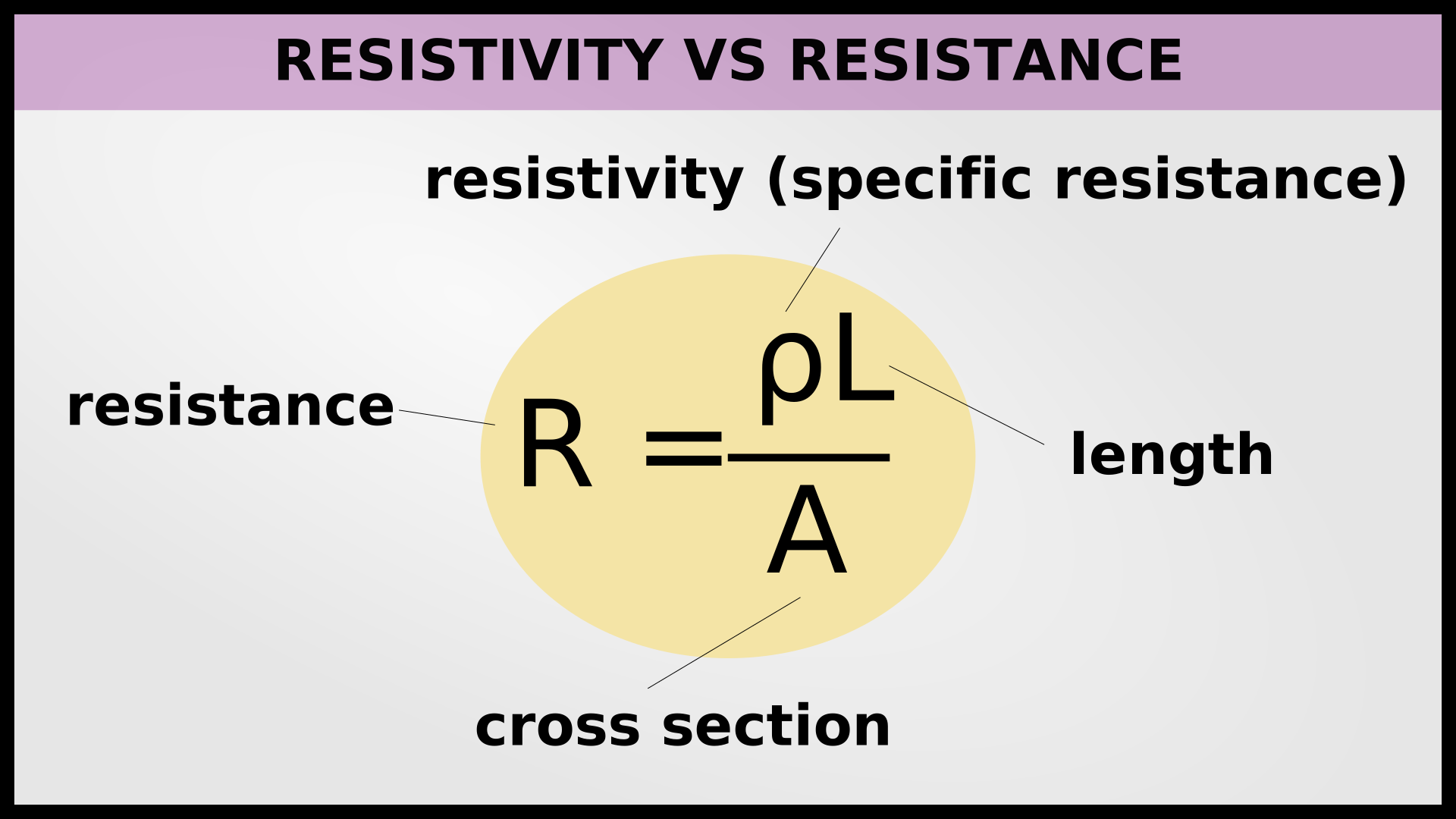
Materials engineers don’t deal with resistance as much as resistivity, but it’s an important relationship to know. Especially because increased resistance can change the temperature, which can affect resistivity
Temperature
We talked about temperature a bit earlier, but here’s another graph showing how temperature affects resistivity of metals.
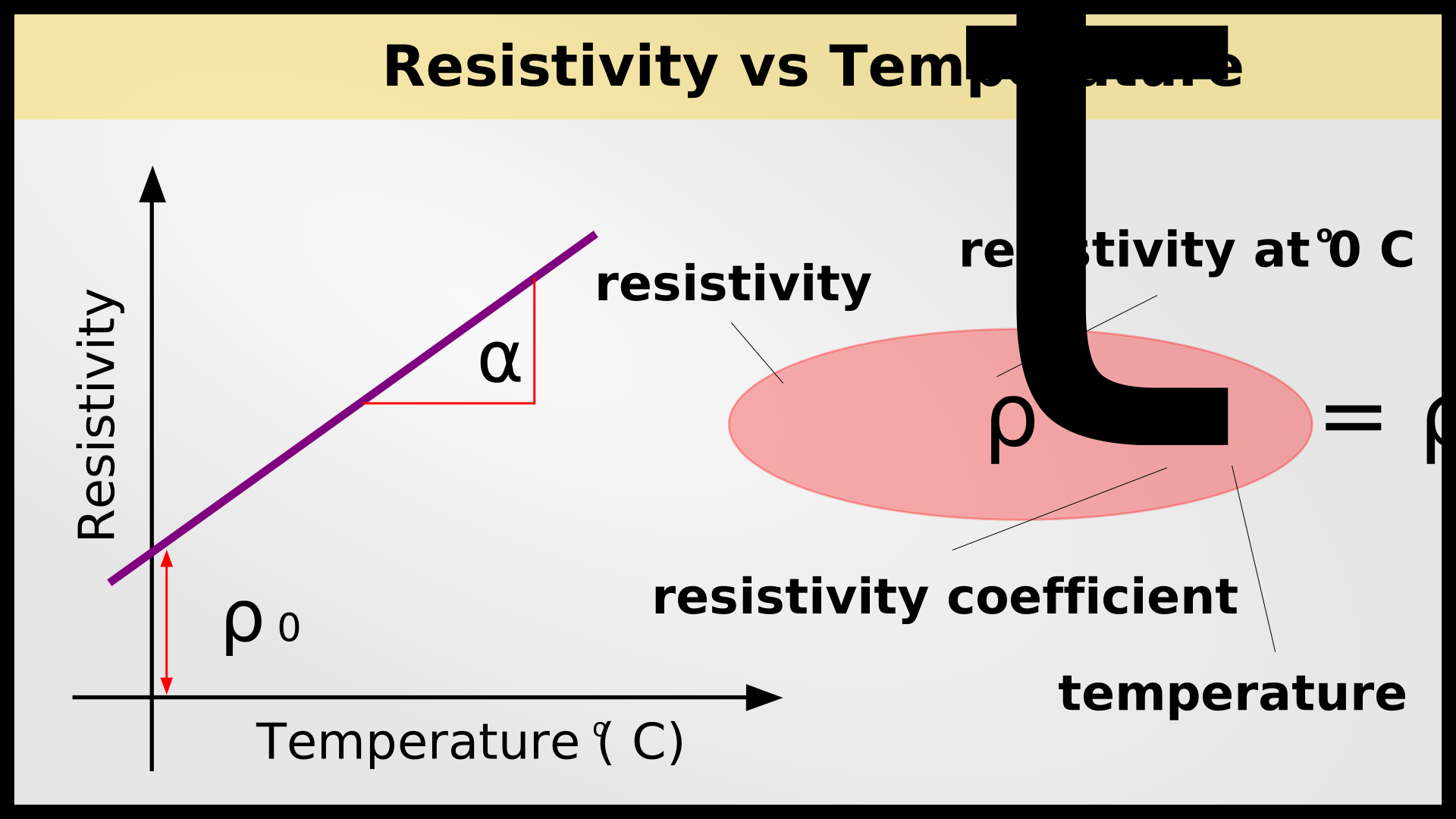
The table below shows resistivity coefficient values for different metals.
| Element | α x 10-3 (1/oC) |
| Aluminum (Al) | 3.8 |
| Copper (Co) | 4.29 |
| Iron (Fe) | 6.41 |
| Mercury (Hg) | 8.9 |
| Nickel (Ni) | 6.41 |
| Platinum (Pt) | 3.93 |
| Silver (Ag) | 1.59 |
| Tin (Sn) | 4.2 |
| Tungsten (W) | 4.5 |
Because increasing the metal atoms’ vibration causes electrons to interact with the atoms more, conductivity decreases as temperature decreases. And, in a perfect crystal at absolute zero, atom vibrations cease and metals become superconducting.
Impurity Atoms
For a similar reason as temperature, increasing impurity atoms reduces conductivity because it decreases the electron mobility. When alloying elements in solid solution, the base metal element forms a lattice structure. Most of the atoms in the lattice are the same kind, but in alloys, there are additional elements that can replace the base element (this is called a substitutional solid solution).
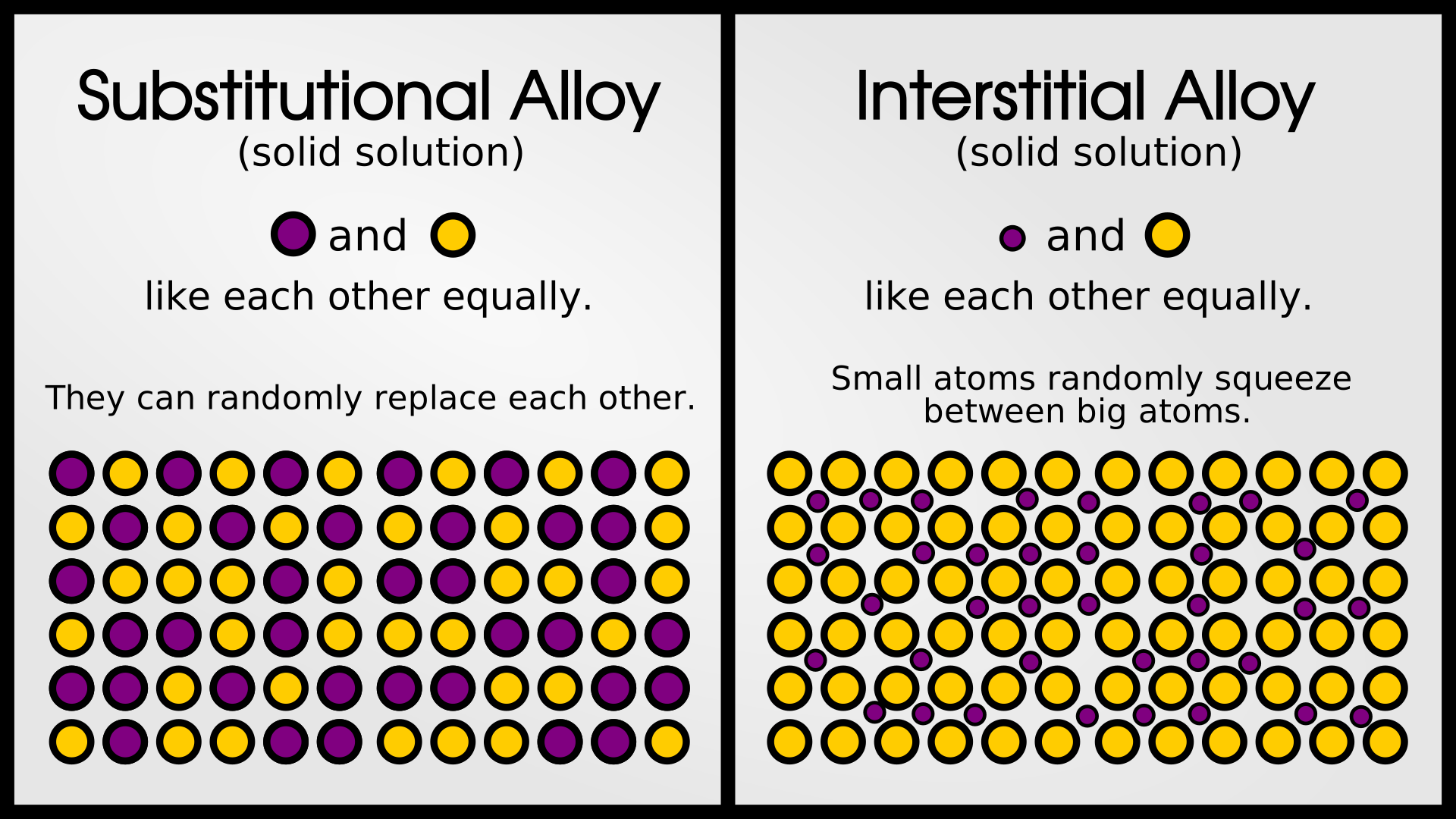
Since these other elements are a different size than the base element, they strain the lattice, decreasing conductivity.
Even small alloying additions can have a large effect on conductivity. For example, adding 0.2 wt% of aluminum to copper can decrease the copper’s conductivity by 20%.
Here is a quick graph showing how resistivity changes as impurity elements are added copper.
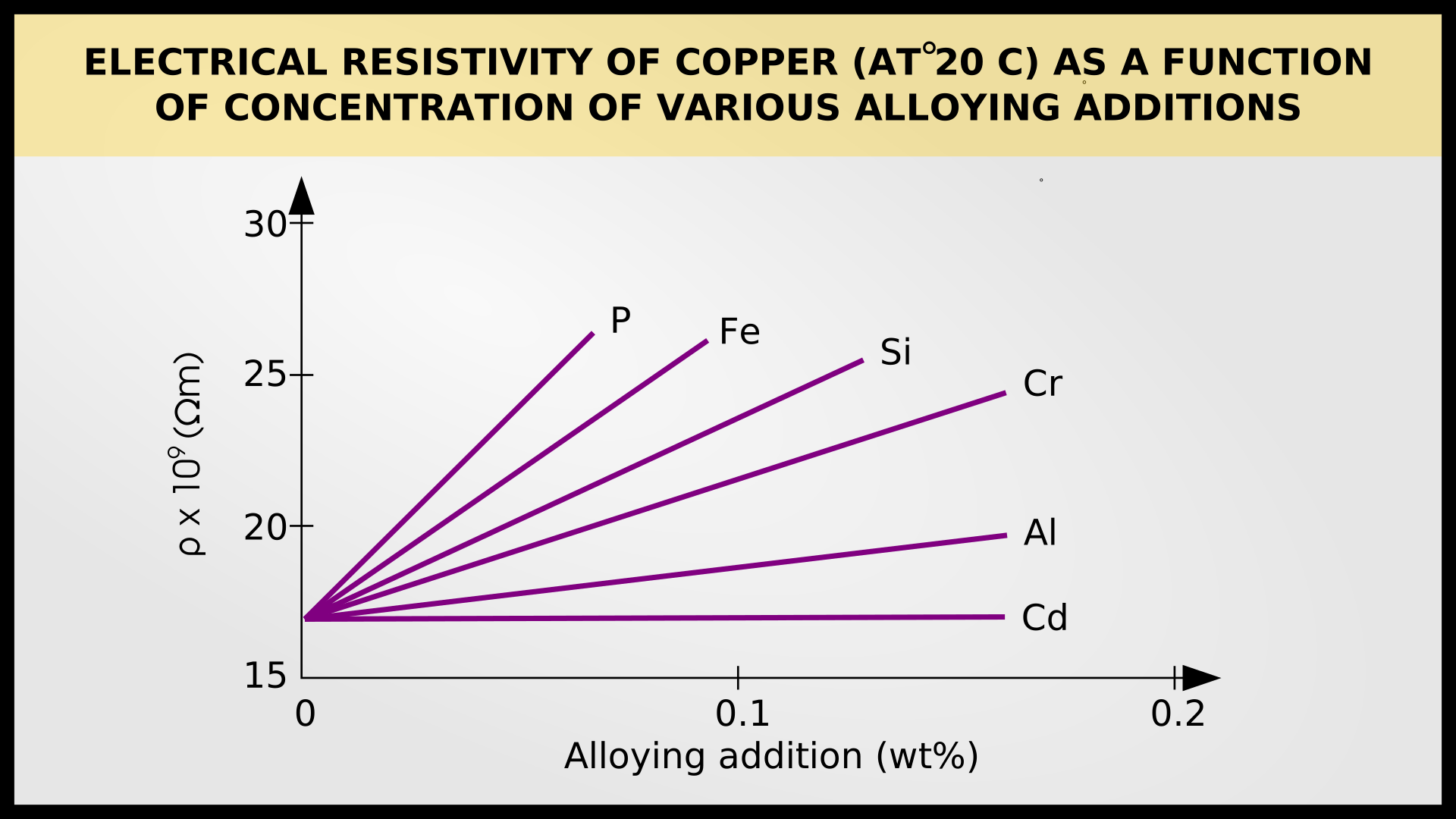
Even if additional elements don’t form a solid solution, the alternative (precipitates) will also decrease conductivity, although the relationship depends on the exact precipitate. In many cases, precipitates decrease conductivity less than solid solution atoms, so one quick method of determining precipitation in metals is by checking its conductivity.
Grain Boundaries
The fourth way that engineers can control conductivity is by changing grain boundaries. Grain boundaries are portions of a metal where two crystal arrangements with a different orientation come together.
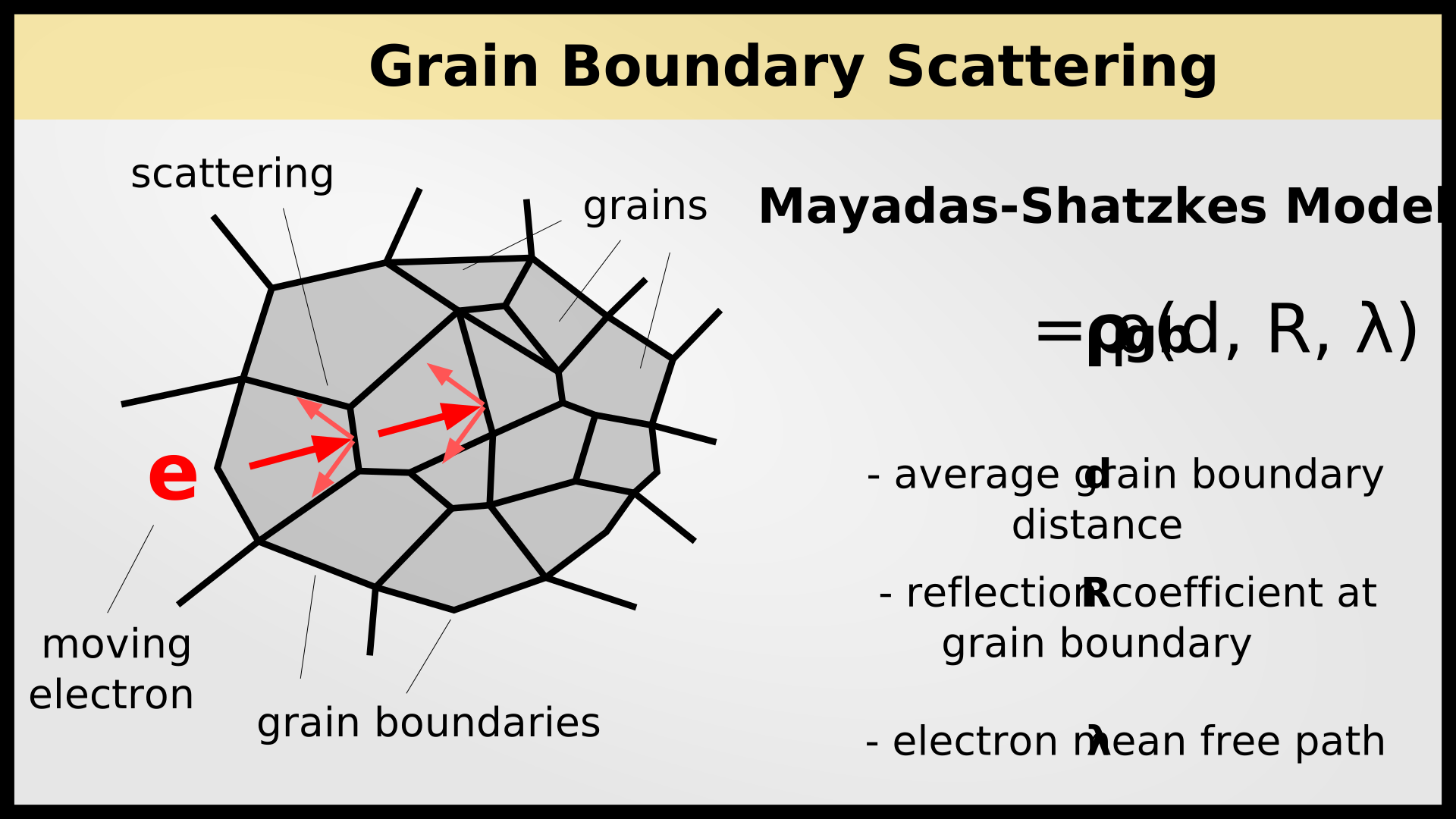
As you might expect from the other points, grain boundaries have lattice strain which interacts with electrons, reducing their mobility. Fewer grain boundaries means increase resistance.
Why Does Water Conduct Electricity? (Ion Conduction)
Unlike metals, which conduct electricity by “free electrons,” water conducts electricity by moving charged ions.
An ion is an atom with a net positive or negative charge.
For example, if you took table salt (NaCl) and dissolved it in water, the salt would dissociate into Na+ and Cl–. Na basically steals an electron from Cl.
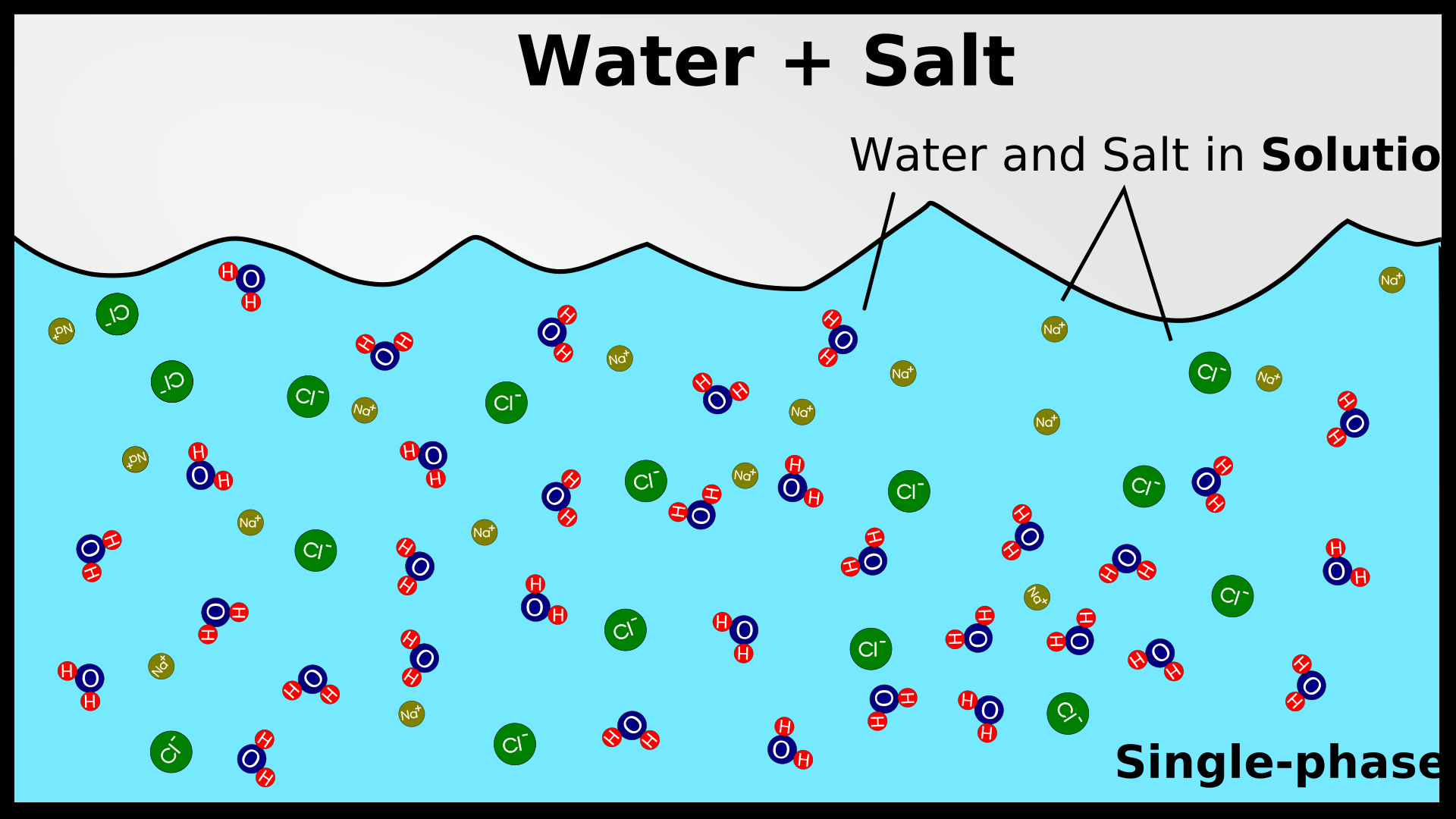
In its regular state, these ions are just spread randomly around the water.
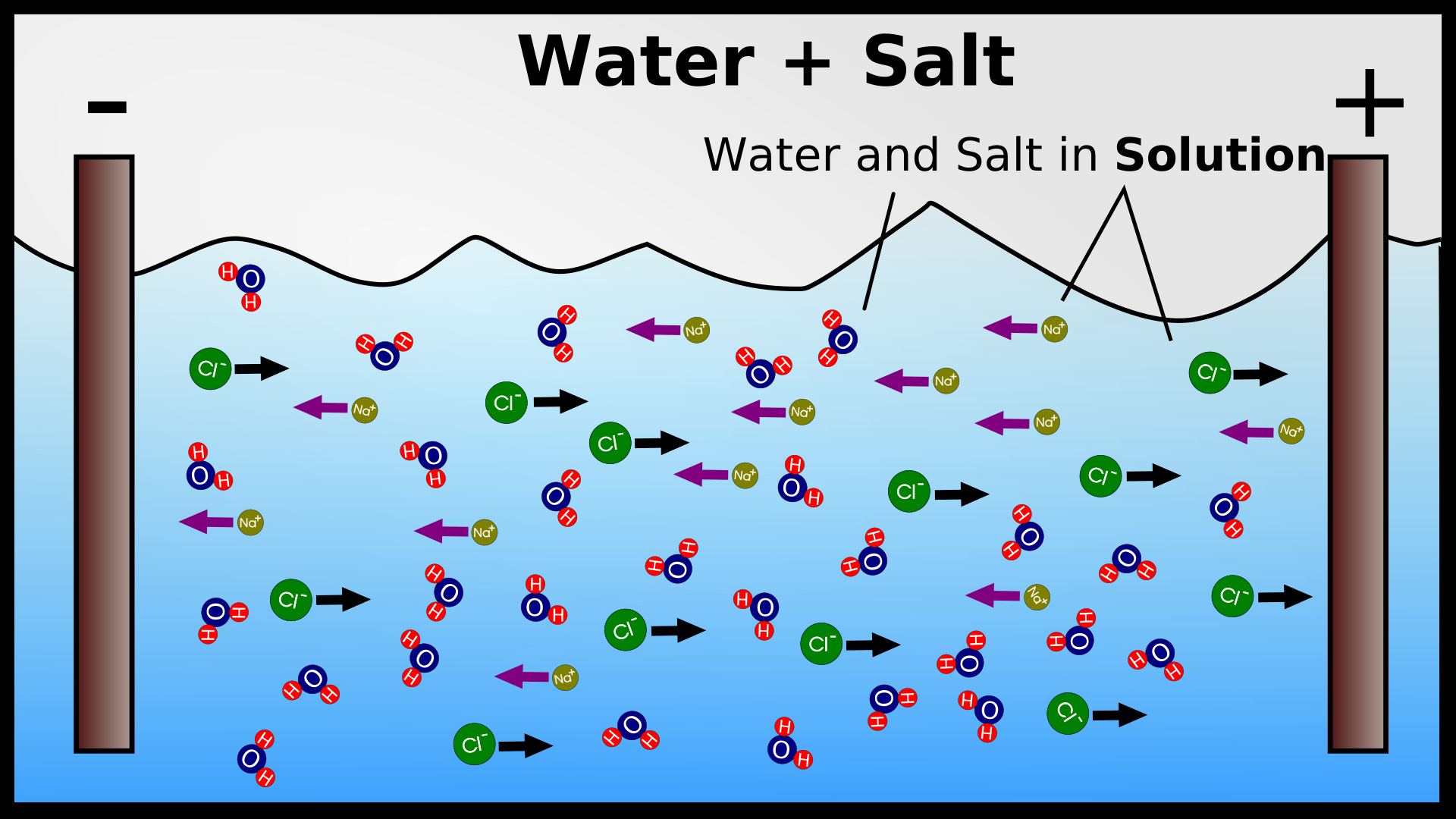
When water experiences a potential change, however, the free-floating ions can move. Since positive ions are attracted to a negative charge, and negative ions are repulsed by a negative charge, if you dipped one end of a live wire into a salted bathtub, the electrons in the wire would repulse the Cl– ions and attract the Na+ ions.
The net flow of charged atoms is what causes electricity to flow through atoms. The electrons themselves are not actually moving. (Technically, there are actually half reactions occurring: 2e– + H2O —> 2OH– + H2 and 2Cl– –> Cl2 + 2e– which means that eventually, the water will use up all the ions and stop conducting).
And yes, this means that pure water is not a good conductor. Sea water is about a million times more conductive than pure water, and a hundred times more conductive than drinking water.
However, since regular drinking water usually has ions dissolved in it (from metal, or minerals), drinking water is still around 10,000 times more conductive than pure water.
Final Thoughts
You learned about how metals are an array of positively charged atoms, held together by “electron glue” which is shared between all the atoms. This sea of electrons occurs because of quantum mechanical effects that give metals no bandgap. In fact, “no bandgap” is probably the best way to define metals.
Using the conductivity equation

you saw that this sea of electrons gives metals a very large n value, because there are lots of free electrons. You also learned how engineers can influence the conductivity of a metal by changing the electron mobility.
Finally, you learned why water “conducts” electricity even though it’s not a metal!
I hope this post has answered all your questions about electrical conductivity in metals!