Showing posts with label Automobile Technology. Show all posts

Saturday, June 15, 2024

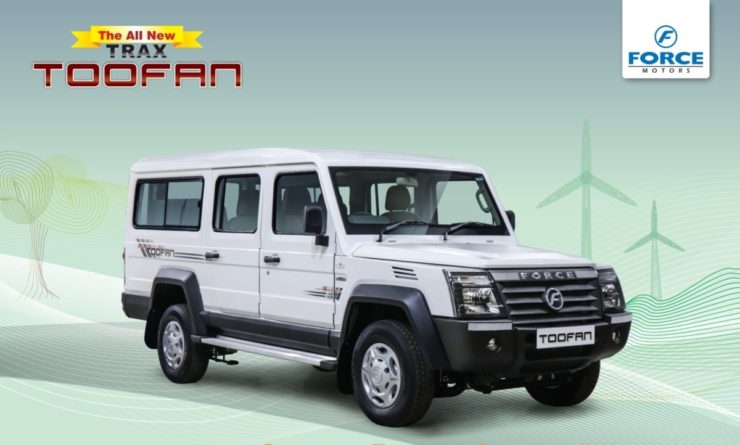
Force Trax Cruiser


The Force Trax BS6 features plenty of changes to the exterior and interior design, and is powered by an updated 2.6-litre turbo-diesel engine

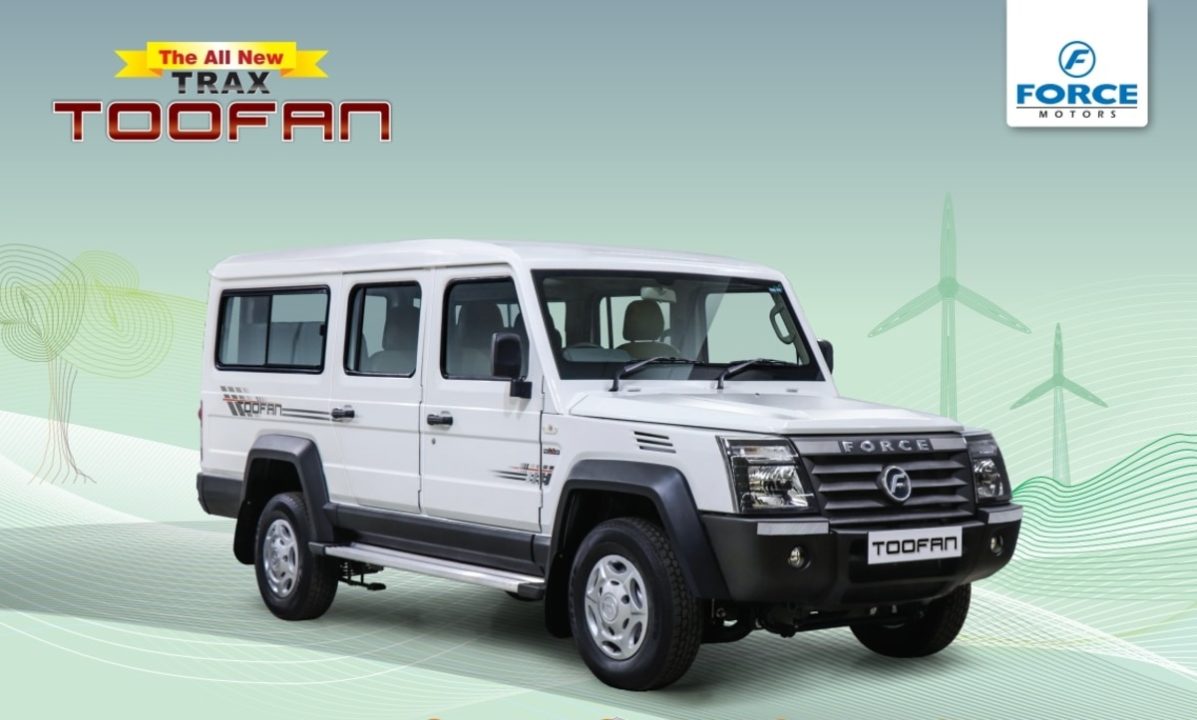
Earlier this year, at the 2020 Auto Expo, Force Motors showcased the BS6 avatars of all its vehicles. Now, the company has finally launched the BS6-compliant Trax MUV in the Indian market. The 2020 Force Trax is available in four variants – Cruiser, Cruiser Deluxe, Toofan, and Toofan Deluxe. The ‘Deluxe’ variants get what the company calls ‘modern dual AC’; you get roof-mounted AC vents for the rear passengers and regular AC vents for the first row seats.

The new Force Trax has undergone a minor facelift as well. The front fascia has been redesigned, with new headlamps, new front grille, and a new front bumper with integrated fog lamps. The BS4 model used to have exposed door hinges, but the BS6 has them hidden, giving the exterior a cleaner look.

The Force Trax BS6 is also larger than before. All four variants of the Trax have the same dimensions – a length of 5,120mm, a height of 2,027, and a width of 1,818. The wheelbase is 3,050mm long, and the vehicle has a ground clearance of 160mm (laden). It gets 15-inch steel wheels (with wheel caps) with 215/75 tyres all around.



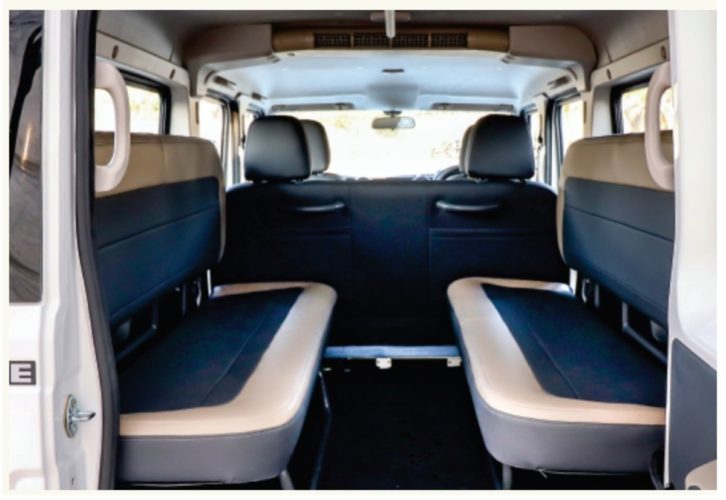
The interior has also been redesigned completely, and gets a dual-tone theme (blue and brown). The dashboard is completely new, as is the instrument cluster. Even the seat upholstery is new. There are multiple seating configurations available here. The Trax Cruiser is offered with 9+D and 12+D seating options, while the Trax gets 11+D seating (D stands for driver).

The features list of the Trax has also been updated considerably. You get power steering, ABS, and EBD as standard. AC is only available in Deluxe trims though. The front brakes are disc, while the rear ones are drums. It gets independent double-wishbone suspension at the front, but sadly, the rear suspension employs archaic leaf-springs.


Force Trax BS6 Price List

Variant Price (ex-showroom)
Cruiser (9+D) Rs. 11,00,666
Cruiser (12+D) Rs. 11,18,542
Cruiser Deluxe (9+D) Rs. 12,78,418
Cruiser Deluxe (12+D) Rs. 12,88,751
Toofan (11+D) Rs. 11,06,534
Toofan Deluxe (11+D) Rs. 12,83,523

The Force Trax BS6 also gets a new ladder-frame chassis, stronger than before with greater torsional rigidity. Powering the MUV is the same 2.6-litre Mercedes-derived diesel engine, updated to generate more power while complying with the stricter emission regulations. This motor develops a peak power of 91 PS and a maximum torque of 250 Nm. There is just one transmission on offer, a 5-speed manual gearbox.

Friday, May 31, 2024

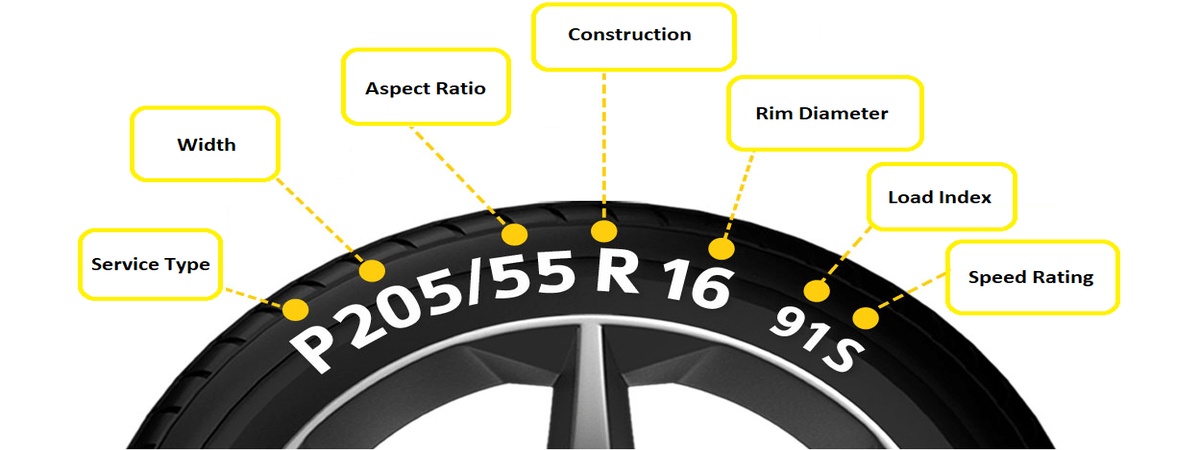
Tyre Markings & Tyres Sizes Explained


car tyre size

Tyre Width: The tyre width rating is a number given in millimetres and is measured from the maximum width of the tyres midpoint of its sidewall to the same point on the opposite sidewall. Wider tyres can offer better grip but can create excessive amounts of road noise.

Tyre Aspect ratio: Also known as the tyres profile, the tyre aspect ratio relates to the depth of the sidewall. The height of the tyre’s sidewall is expressed as a percentage of the tyres section width. It can be worked out by dividin

HOW TO READ A SIDEWALL Sizing Information

Sizing Information


Sizing information molded on the tire sidewall provides a significant amount of detail about the tire. Once you know how to decode the data, you’ll be able to better understand the tire's intended purpose, dimensions, load capacity, speed and much more.

Service Type or Size Designation


Some tire size designations s

Monday, May 6, 2024

Why Is A Diesel Engine Used For Heavy Load Operation Instead Of A Petrol Engine?

When it comes to heavy load operations, diesel engines are preferred over petrol engines for several reasons. The main factors is the torque output of diesel engines. Diesel engines are known for producing a lot more torque compared to petrol engines. Torque is the rotational force that is responsible for moving heavy loads. The higher torque output of diesel engines makes them well-suited for applications that require towing, hauling, or carrying heavy loads.

Another reason why diesel engines are used for heavy load operations is their fuel efficiency. Diesel fuel has a higher energy density compared to petrol, which means that it contains more energy per unit volume. This allows diesel engines to extract more energy from the fuel, resulting in better fuel efficiency. When operating under heavy load conditions, diesel engines can deliver more power while consuming less fuel compared to petrol engines.

Diesel engines are designed to withstand higher compression ratios. In a diesel engine, air is compressed to a high pressure and temperature before the fuel is injected. This compression ignition process allows diesel engines to generate more power and handle heavier loads. Petrol engines, on the other hand, rely on spark ignition and have lower compression ratios, which limits their ability to handle heavy loads efficiently.

Monday, April 22, 2024

Why Does A Turbocharger Require An Intercooler While A Supercharger Does Not?

In truth, neither turbocharging nor supercharging require an “intercooler,” which is properly named a “charge air cooler.” Forced induction systems of all types can run without cooling the air charge, but doing so reduces the efficacy of the system.

Forced induction, regardless of whether belt-driven (supercharger) or exhaust-gas-impeller-driven (turbocharger) work by pushing more air into the intake manifold. More air means more oxygen, which with additional fuel and spark mean more power (remember kids, suck, squish, bang, blow!). Accelerating air heats it, and compressing it heats it even more. If you remember, heat is simply motion at the atomic level and cold is just a lack of motion, so that’s pretty easy to remember.

A basic diagram of a turbocharging system

Intercoolers work by running air through a radiator made of many small fins of highly heat-conductive material, usually aluminum or similar. The air charge passes through the radiator, and since the car is moving, fresh air is running across the fins on the outside, enabling heat transfer. It is exactly the same thing as your radiator (and if your car is equipped with them, oil or transmission coolers), with the only notable difference being that your radiator has fluid in it and the intercooler has air in it.

Intercoolers are usually placed between the compressor fan where the air is accelerated and/or compressed and the intake manifold, cooling the charge after its heated and before it goes into the cylinders.

A Roots-style blower sticking out of the hood of a muscle car, with carburetors and air filter on top of it.

Intercooling is less common among superchargers for one simple reason - packaging. Roots type and twin-screw type superchargers are usually mounting directly on top of the intake manifold - usually as an actual part of the intake manifold - which makes placing an intercooler difficult, though it has been done before. Centrifugal superchargers and turbochargers (which differ only in the fact that where the turbocharger has an exhaust-driven impeller, the supercharger has a belt-driven gearset instead) are remotely mounted, and thus make including an intercooler in the system easy.

A more realistic view of packaging with an air-to-air charge air cooled turbocharging system. Note the remote placement of both the turbo and the intercooler

This is a twin-screw supercharger. It is a positive displacement supercharger, meaning that it compresses air inside the supercharger as well as accelerates it into the intake manifold. Note that the compressed air comes out the bottom.

An air-to-water intercooler for a twin screw blower, which mounts directly to the bottom of the blower.

A twin-screw supercharger with integrated intercooler. Note the custom intake manifold that includes the intercooler, and the height of the system.

Installed in a Subaru BRZ this SprintEX brand twin-screw intercooled supercharger barely clears the hood - notice the height of the pulley and supercharger assembly (in the very center of the photo, the large pulley with the belt going down is the supercharger drive pulley). Hood clearance will be very tight. Notice that the blue strut tower brace is significantly below the top of the blower.

A Crawford Performance turbo kit for a Subaru BRZ. Notice the lack of height in the black intake manifold, allowing the strut tower brace to be connected, and the green piping which leads to the green and silver turbocharger mounted centrally at the front of the bay. The remote nature of turbocharging allowed the designer to move that mass away from the top of the engine bay leaving room for the strut tower brace to stiffen the chassis.

Most factory superchargers are Roots-type blowers in the US. GM has used Eaton manufactured Roots blowers exclusively to my knowledge for decades, though supercharging has fallen out of favor to turbocharging, due to turbochargers being more fuel-efficient while providing more power at the price of a higher boost threshold (often mistakenly called turbo lag).

In practice, most forced induction systems are limited to around 5–6psi of boost without some method of cooling the air charge. Boost is the amount of compressed air, measured in pounds per square inch in Standard measure or Bar in metric, above our normal atmospheric pressure added to the air charge. Earth’s atmosphere at sea level is 14.5psi or 1 Bar. So a system running 5 pounds of boost is pushing 19.5psi absolute, 5psi above our normal atmospheric pressure. We tend to find that pressures much above 5–6psi (.34-.4 bar) lose efficiency without a charge air cooler, where the air is expanding from being heated so much that it overwhelms the compression we’re trying to achieve.

Adiabiatic efficiency map, showing air charge temperatures by color as they pass through a twin screw supercharger

Few factory systems rely on anything but a traditional air-to-air intercooler (as described above, like a radiator), because the alternatives are either consumable or complex (which you can simply read as “expensive”). Aftermarket setups sometimes use water or methanol injection, which are exactly what they sound like, injecting those substances into the air charge, usually in the intake manifold, to cool the air charge through evaporation. The problem, of course, is that you run out of water or methanol and have to refill those tanks, and most people can barely be bothered to put gas in their cars and have their oil changed.

You’ll also occasionally see air-to-water intercoolers, which run the compressed air charge over a heat exchanger filled with coolant to cool the air charge. These setups are more complex, and thus more expensive, because the coolant must be cooled down again after it’s heated, necessitating a pumping system to move the coolant around, check valves to ensure hot coolant isn’t recirculated before it cools down, and a second heat exchanger to dissipate the heat transferred from the air charge to the coolant.

Thus ends your basic education on forced induction. Hopefully you understand the nature of forced induction and intercooling sufficiently to understand why charge air coolers are commonly used, but not required.

Saturday, April 13, 2024

How long can a car sit without driving?

 What happens if a car is not driven for 6 months?

I understand the concern many car owners have about leaving their vehicles idle for extended periods. Let us understand, how long a car can sit without driving and the potential consequences of not using it for six months.

Cars are meant to be driven regularly, and they thrive on being in motion. However, if you need to leave your car parked for a while, fear not, as it can generally sit without driving for about two to three weeks without any major issues. During this period, the car's various components can handle the inactivity.

Now, what happens if your car is left untouched for six months? Well, that's when things can start to get tricky. Prolonged inactivity can lead to a series of problems that may take a toll on your beloved vehicle.

One of the first issues you might encounter is battery drain. As the car sits idle, the battery loses its charge, especially if there are electrical components drawing power while the vehicle is not in use. This could leave you with a dead battery, requiring a jump-start or even a replacement.

Another concern is tire flat spots. When a car remains stationary for an extended period, the tires can develop flat spots. This may cause vibrations and uneven wear, ultimately affecting the car's overall performance and safety.

Fuel degradation is yet another problem that can arise during extended periods of inactivity. Over time, fuel can break down, leading to the formation of varnish and gum in the fuel system. This can clog fuel injectors and other components, resulting in engine issues when you eventually try to start the car.

Let's not forget about the car's fluids. They, too, can suffer from deterioration when the vehicle sits unused for months on end. Engine oil, coolant, and brake fluid may degrade, failing to provide the necessary lubrication and protection required to keep the engine running smoothly.

Last but not least, there's the issue of corrosion and rust. Cars that sit idle for long periods are more vulnerable to rust, especially if they're exposed to harsh environmental conditions. Rust can wreak havoc on the car's structural integrity and appearance.

It's understandable to feel worried about leaving your car unattended for such a long time. But there are measures you can take to mitigate these potential issues and keep your car in good shape. For instance, if you know you won't be using your car for an extended period, consider disconnecting the battery or using a battery maintainer to prevent draining. To avoid tire flat spots, try to move the car slightly every few weeks or use tire cradles to distribute the weight evenly.

Before storing your car, fill up the fuel tank and add a fuel stabilizer to minimize fuel degradation. If possible, store your car in a garage or carport to protect it from the elements and reduce the risk of rust and corrosion.

By being proactive and carrying out regular maintenance, your car will be more likely to withstand the period of inactivity and be ready to hit the road again when you need it. Remember, a little care and attention can go a long way in preserving the health of your trusted four-wheeled companion!

I hope this helped and thank you for reading!

Why are manual cars faster than automatic cars?

The debate over manual versus automatic transmissions in cars has been ongoing for decades, and one common claim made by manual transmission enthusiasts is that manual cars are faster than automatic cars. This belief stems from the idea that drivers have more control over gear changes in a manual transmission, leading to faster acceleration and better performance. However, this notion is not as straightforward as it seems, and there are several factors at play when comparing the speed of manual and automatic cars. In this article, we will delve into the key reasons behind the perception of manual cars being faster and explore the nuances of this claim.

1. The Power of Perception

The belief that manual cars are faster than automatics often arises from the perception of control and engagement that a manual gearbox provides. Shifting gears manually can make the driving experience feel more dynamic, allowing drivers to synchronize gear changes with their desired performance. This perception of control can create the illusion that manual cars are quicker, even if the actual speed advantage is negligible.

2. Mechanical Efficiency

In the past, manual transmissions did indeed provide a mechanical advantage over early automatic transmissions. The mechanical link between the engine and wheels in manual cars allowed for less power loss during transmission, resulting in more efficient power delivery. However, with advancements in automatic transmission technology, modern automatics have closed the efficiency gap significantly. In fact, some high-performance automatic transmissions, such as dual-clutch units, can outperform manual transmissions in terms of efficiency and speed.

3. Clutch Engagement

One aspect that can affect acceleration times in manual cars is the driver's proficiency in engaging the clutch and shifting gears. Proper clutch engagement and timely gear changes can optimize power delivery, leading to quicker acceleration. Conversely, inexperienced drivers may experience slower gear changes, affecting the overall performance of the car. In automatic cars, gear changes are performed electronically or hydraulically, resulting in consistent and precise shifts, regardless of the driver's skill level.

4. Launch Control in Automatics

Many modern automatic transmissions come equipped with launch control systems that optimize acceleration from a standstill. Launch control ensures that the engine's power is efficiently transferred to the wheels for maximum traction and acceleration. This feature has become increasingly common in high-performance automatic sports cars and is capable of achieving blistering acceleration times.

5. Turbocharging and Supercharging

In recent years, advancements in forced induction technologies, such as turbocharging and supercharging, have greatly enhanced the performance of automatic cars. These technologies increase the engine's power output, leading to quicker acceleration and higher top speeds. While manual cars can also benefit from forced induction, the precise control of boost pressure and power delivery in automatic transmissions can lead to superior performance.

6. Dual-Clutch Transmissions

Dual-clutch transmissions (DCTs) have revolutionized the automatic transmission landscape. DCTs offer rapid and seamless gear changes, utilizing two separate clutches to pre-select gears for almost instantaneous shifts. As a result, DCTs have become a popular choice for high-performance sports cars, offering exceptional speed and precision in gear changes.

7. Modern Gear Ratios

Modern automatic transmissions are designed with carefully optimized gear ratios to maximize acceleration and fuel efficiency. Some automatic transmissions even offer more gears than their manual counterparts, providing a broader power band and better acceleration across a wider range of speeds.

Conclusion

In conclusion, the perception that manual cars are inherently faster than automatics is a notion rooted in tradition and perception rather than absolute truth. While manual transmissions do offer drivers a more engaging and connected driving experience, advancements in automatic transmission technology have significantly narrowed the performance gap.

Factors such as mechanical efficiency, driver skill, launch control, forced induction technologies, and dual-clutch transmissions play crucial roles in determining the speed and performance of both manual and automatic cars. Additionally, modern automatic transmissions are designed with optimized gear ratios and advanced control systems, resulting in impressive acceleration and efficiency.

Ultimately, the choice between manual and automatic transmissions should not be solely based on speed but rather on personal preference, driving style, and the intended use of the vehicle. Both types of transmissions have their merits and appeal to different types of drivers. The joy of driving comes from the connection between man and machine, whether it be through the tactile engagement of a manual gearbox or the seamless efficiency of an automatic transmission.

Piston Slap

Piston slap refers to the knocking or tapping sound coming from the engine compartment. Piston slap is a commonly encountered issue in internal combustion engines that can lead to unwanted noise, reduced performance, and potential long-term damage if left unaddressed.

It is the knocking or rattling noise produced when the piston moves inside the cylinder bore. This happens due to excessive clearance between the piston and the cylinder walls. The engine piston wants to move frequently inside the cylinder bore. The lubrication inside the cylinder bore helps to move it freely inside. If there is any problem that happens inside it will cause noise.

Piston slap is generally caused when the cold running clearance (piston-to-wall clearance) is large enough that when the piston rocks from side to side in the bore it “slaps” the side of the cylinder and causes noise.

Various factors can contribute to the development of piston slaps in an engine:

  • Worn engine walls
  • Improper piston design
  • Incorrect piston installment
  • Improper Lubrication
  • Worn piston rings.

Thursday, April 11, 2024

If trains use diesel engines to power electric motors, why don't trucks do the same?

Trains commonly use a setup known as diesel-electric propulsion, where a diesel engine drives an electric generator. The electricity generated is then used to power electric motors that drive the train's wheels. This system offers several advantages for trains.

Diesel engines are renowned for their ability to produce high levels of torque, making them suitable for heavy-duty applications like hauling heavy loads. By utilizing the diesel engine to generate electricity and then power electric motors, trains can benefit from the robust torque output of the diesel engine while enjoying the advantages of electric propulsion.

Also diesel engines are known for their fuel efficiency, especially when operating at a constant speed, which is common for trains on long-distance routes. By employing the diesel-electric setup, trains can achieve better overall fuel efficiency compared to traditional mechanical transmission systems.

Diesel-electric propulsion allows for improved noise and vibration control. By isolating the diesel engine from the wheels, vibrations and noise can be minimized, resulting in a smoother and quieter ride for passengers.

On the other hand, trucks generally rely on direct mechanical power transmission from the diesel engine to the wheels. Trucks operate in a more constrained environment compared to trains. The additional components required for diesel-electric propulsion, such as the electric motors and generators, would add weight and take up valuable space within the truck's chassis. This can impact payload capacity, maneuverability, and overall cost-effectiveness for trucking companies.

Unlike trains that typically operate at a relatively constant speed on dedicated tracks, trucks frequently encounter varying traffic conditions, including frequent stops and starts. Direct mechanical power transmission provides more immediate control over the vehicle's acceleration and responsiveness, which is crucial in these dynamic operating conditions.

There are ongoing advancements in electric and hybrid technologies for trucks, especially for urban and short-haul applications. Some manufacturers are exploring the use of electric or hybrid powertrains in trucks to address environmental concerns and improve fuel efficiency. But, the transition to widespread adoption of such systems in the trucking industry is a gradual process that involves various technical, economic, and infrastructural considerations.

Wednesday, April 10, 2024

Bugatti Veyron - 8 litre W16 engine 1000+ horsepower

It is without a doubt one of the most complex car engines ever produced. A complexity that is as unreasonable as it is excessive and useless because V8s of similar displacement can easily rev just as fast and with 2 turbochargers only would develop equivalent power with fewer cylinders, therefore in principle with better thermal efficiency.

Crankcase and one cylinder head of the Bugatti W16

The Volkswagen Group (VAG) certainly chose to develop this crazy 16-cylinder monster since it already had the W8 and W12 in production, themselves initially developed from the VR6. Thus a W16 was only a relatively small development step from the W8 and W12 and it could use some common parts, while a large and powerful V8 or V12 would have been a totally new development. Another point that must have been influential is the prestige provided by a 16 cylinder engine: a V8 would appear too common for rich snobbish people!

Cutaway of the W12 6.0 TSI used on the Audi A8 and Bentley Continental

Technical specifications of the various VR and W VAG engines. I made this table for the tech file Evolution des moteurs VW / Audi VR et W
.

The W16 shares its 86 mm bore with the V6 3.2 FSI and W12 6.3 FSI. A twin-turbocharged V8 of 120 mm bore and 90 mm stroke would have a displacement of 8143 cm3 and could rev all day long at 6500 rpm. It would be externally smaller and weigh less than the Veyron’s 400 kg W16 monster while developing equivalent power and torque. A Chevrolet big block, in its most heavy all cast iron variant, weights about 310 kg (680 lbs) complete with ancillaries! The aluminum versions are at around 250 kg.

Brian Callahan's answer to What is the weight of a Chevy 454?

Edit: The main and rod bearings on these W engines of the VAG group are very much stressed. Their crankshafts are so short that the journals and crankpins have an extraordinarily small width: the rod bearings are only 11.6 mm wide and the main ones 15.8 mm. It is clear that the specific loads on these bearings are very high and that the use of an oil too fluid when hot is dangerous in this case. Those engines require a suitable lubricant which meets very special specifications established by Volkswagen: VW 503 01 whose grades are generally 0W-40 or 0W-30 but with an HTHS viscosity at 150 ° C> 3.5 mPa.s or VW 504 00 whose grade is generally 5W-30 but HTHS viscosity at 150 ° C> 3.5 mPa.s

Crankshafts of the W8 and W12 of the VAG group compared with those of conventional V8 and V12. Motortechnische Zeitschrift (MTZ) picture

The V angle between the cylinder groups of the W16 being 90°, the rod journals are not split

Friday, April 5, 2024

Why aren't 2-stroke engines used in cars?

Certainly! The use of 2-stroke engines in cars is quite limited due to a range of technical, environmental, and practical reasons. Here's why 2-stroke engines are not commonly found in cars:

1. Efficiency and Fuel Consumption:

  • 2-stroke engines tend to be less fuel-efficient compared to 4-stroke engines commonly used in cars.
  • In a 2-stroke engine, some of the fresh fuel-air mixture can escape through the exhaust port before complete combustion, leading to higher fuel consumption.

2. Emissions and Environmental Concerns:

  • 2-stroke engines produce higher levels of emissions, particularly unburned hydrocarbons and particulate matter.
  • Stringent emission regulations in many countries have made it challenging for 2-stroke engines to meet the required environmental standards.

3. Oil Consumption:

  • 2-stroke engines require oil to be mixed with the fuel for lubrication.
  • This oil consumption not only leads to higher emissions but also requires continuous oil replenishment and maintenance.

4. Noise and Vibration:

  • 2-stroke engines tend to be noisier and generate more vibrations compared to 4-stroke engines.
  • Modern cars prioritize comfort and reduced noise levels for passengers, making 2-stroke engines less suitable.

5. Durability and Longevity:

  • 2-stroke engines generally have shorter lifespans due to higher stress levels and wear on components.
  • Cars are expected to provide long-term durability and reliability, which favors the more robust nature of 4-stroke engines.

6. Complexity of Design:

  • 2-stroke engines have a more intricate design, requiring precise synchronization between intake, compression, combustion, and exhaust phases.
  • 4-stroke engines have a simpler design with dedicated strokes for each phase.

7. Torque and Power Delivery:

  • 4-stroke engines offer smoother and more consistent torque and power delivery across a wide range of engine speeds.
  • This characteristic is crucial for diverse driving conditions encountered in daily car usage.

8. Combustion Control:

  • 2-stroke engines have less control over the combustion process, which can lead to efficiency and emissions challenges.
  • 4-stroke engines offer better control and optimization of combustion parameters.

9. Fuel Injection Technology:

  • Modern cars often employ advanced fuel injection systems to precisely manage fuel delivery and emissions.
  • Implementing such systems in 2-stroke engines to improve their performance and efficiency can be complex and costly.

10. Advancements in Alternatives:

  • As automotive technology evolves, the focus is on cleaner and more efficient powertrain options.
  • Hybrid and electric technologies, as well as advanced internal combustion engines, provide better solutions for improving efficiency and reducing emissions.

In summary, the limited use of 2-stroke engines in cars is due to their inherent challenges in terms of efficiency, emissions, noise, and durability. The automotive industry's shift towards more environmentally friendly and efficient technologies has led to the preference for 4-stroke engines and other innovative powertrain solutions.